CN
-
Service Hotline
15766086363


Release Date:Mar 03, 2026
Reverse Circuit Board Copy refers to the process of creating an identical physical replica of a printed circuit board (PCB) by extracting design data from an existing board—focused solely on replicating the board’s structure rather than modifying or optimizing it. Unlike reverse engineering (which may generate editable design files for future use), “copy” emphasizes producing a one-to-one physical duplicate, making it ideal for low-volume replacement of legacy PCBs where original manufacturing files are lost.
The process begins with High-Resolution Imaging: Technicians use specialized cameras (often with UV filters to capture faint trace details) to take images of the PCB’s top and bottom layers. For multi-layer boards, chemical etching (removing outer layers sequentially) or X-ray scanning is used to capture inner-layer traces without damaging the board.
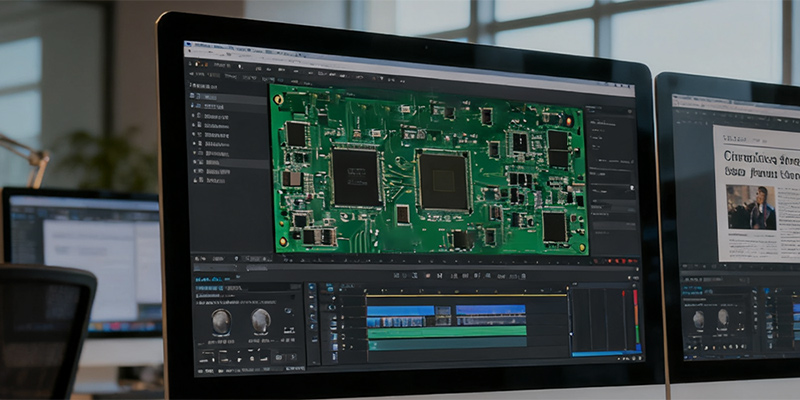
Next is Trace & Feature Replication: Image-editing software (e.g., Photoshop, specialized PCB copy tools) is used to trace the captured images, recreating trace widths, pad sizes, mounting holes, and solder mask patterns. The replicated design is converted into Gerber files—industry-standard format for PCB fabrication—ensuring dimensions match the original within tight tolerances (often ±0.1mm).
Then comes Fabrication Validation: A test PCB is fabricated using the replicated Gerber files. Technicians compare the test board to the original via visual inspection (checking trace alignment, hole placement) and electrical testing (continuity checks to confirm no open/short circuits). Adjustments are made to the Gerber files if discrepancies are found—for example, resizing a pad that is too small.
Finally, Volume Copying: Once validated, the Gerber files are used for bulk fabrication. This process is cost-effective for simple PCBs (e.g., single-layer power supply boards) but faces challenges with complex designs (e.g., high-density multi-layer boards with blind vias) where small errors in trace replication can cause functional failures. Ethical and legal compliance (ensuring no patent infringement) is also a key consideration.

Email: 15361682656@163.com
Factory: Room 703, Kelunte R&D Building, No. 1 Ganli 5th Road, Jihua Street, Longgang District, Shenzhen City