CN
-
Service Hotline
15766086363


Release Date:Mar 02, 2026
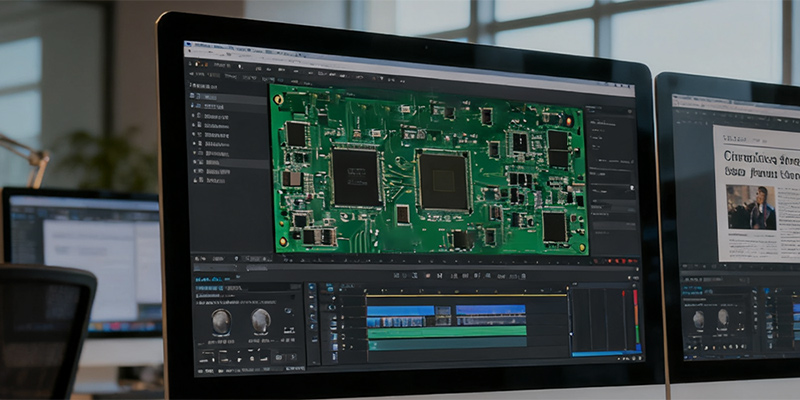
PCBA Board Reverse Engineering (often used interchangeably with PCBA Reverse Engineering) is the comprehensive process of extracting design, component, and functional data from a physical Printed Circuit Board Assembly (PCBA)—a board populated with active (e.g., microchips, transistors) and passive (e.g., resistors, capacitors) components. Unlike bare PCB reverse engineering (which only analyzes the unpopulated board), this process integrates both the board’s physical structure and component interactions to replicate, repair, or modify the fully assembled unit.
The workflow starts with Pre-Teardown Documentation: Technicians use high-resolution cameras and 3D scanners to capture the PCBA’s overall layout, component positions, and labeling (e.g., part numbers, polarity marks) to create a visual reference. An ESD-safe workspace is set up to prevent electrostatic damage to sensitive components during disassembly.
Next is Component Teardown & Analysis: Using precision tools (thermal tweezers, hot air desoldering stations), experts carefully remove components, documenting each part’s manufacturer, part number, package type (e.g., SMD, DIP), and electrical specifications (e.g., capacitor voltage rating, IC pinout). Components are functionally tested with multimeters or oscilloscopes to confirm performance; obsolete parts are cross-referenced with datasheets to find compatible alternatives.
Then comes PCB Structure Mapping: The bare board is analyzed to decode trace routes, layer stackups (via X-ray tomography for multi-layer boards), and via types (through-hole, blind, buried). Circuit tracers are used to map electrical connections between pads, ensuring accurate schematic generation.
Finally, Integration & Validation: The reversed PCB design and component data are combined to create editable files (Gerber, BOM, schematic). A prototype PCBA is fabricated and tested (in-circuit testing, functional testing) to ensure it matches the original’s performance—including power consumption, signal integrity, and environmental resilience. This process is critical for legacy equipment maintenance (e.g., industrial control systems) and competitive product analysis. Challenges include decoding encrypted ICs (requiring specialized firmware analysis) and sourcing rare components, demanding collaboration with niche distributors.

Email: 15361682656@163.com
Factory: Room 703, Kelunte R&D Building, No. 1 Ganli 5th Road, Jihua Street, Longgang District, Shenzhen City