CN
-
Service Hotline
15766086363


Release Date:Mar 16, 2026
A PCBA Copy Production Service is a specialized offering where third-party providers handle end-to-end creation of functional PCBA copies—from reverse engineering the original PCBA to fabricating PCBs, sourcing components, assembling, testing, and delivering validated units. Unlike in-house production (requiring expertise and equipment), this service leverages the provider’s technical resources, supply chain networks, and quality systems to deliver accurate, reliable PCBAs—ideal for businesses lacking dedicated reverse engineering teams, small-to-medium enterprises (SMEs), or organizations needing one-time/medium-volume copies of legacy or hard-to-replicate PCBAs (e.g., industrial sensors, automotive ECUs).
The service begins with Client Consultation & Data Collection: The provider works with the client to define goals (e.g., 10 prototype copies, 200 production units), timeline, and quality requirements (e.g., automotive-grade testing). The client supplies the original PCBA (or a “golden sample”), and the provider documents its condition (e.g., component damage, solder joint wear) before starting work.
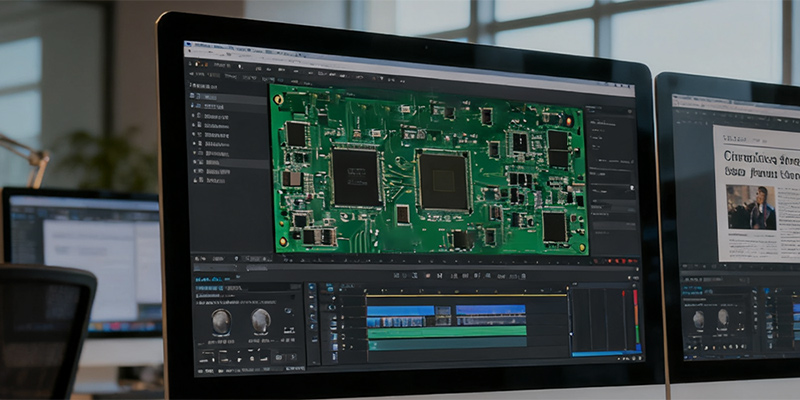
Next is In-House Reverse Engineering: The provider’s engineers use advanced tools (3D scanners, X-ray tomography, circuit tracers) to extract design data—component placement, PCB layer stackup, trace routing, and BOM details. This data is converted into editable files (Gerber, BOM, assembly drawings) and validated against the original PCBA via overlay analysis and electrical testing (e.g., impedance measurement). The client is provided with a design review package for approval before production.
Component sourcing is a key value-add: Supply Chain Expertise: The provider uses established relationships with authorized distributors (e.g., Digikey, Mouser) to source exact components; for obsolete parts, they identify qualified equivalents (with client approval) or source NOS (New Old Stock) units. Incoming components undergo AQL (Acceptable Quality Level) sampling—e.g., testing 2% of microcontrollers for functionality—to prevent counterfeits or defects.
Production follows Standardized Assembly: The provider fabricates PCBs using the reversed Gerber files (ensuring material matching to the original) and assembles them via automated SMT lines (for medium volumes) or benchtop processes (for prototypes). Solder paste type, reflow profiles, and inspection standards (e.g., IPC-A-610 Class II/III) are aligned to the client’s requirements.
Testing is comprehensive: Multi-Stage Validation: PCBs undergo continuity and impedance testing; assembled PCBAs undergo AOI (for component misplacement), ICT (for electrical connections), and functional testing (applying client-specified inputs to confirm output matching the original). For specialized applications, additional testing includes thermal cycling (e.g., -40°C to 85°C for industrial use) or vibration testing (for automotive PCBAs). Test reports are provided to the client for transparency.
Finally, Delivery & Post-Support: Validated PCBAs are packaged in anti-static materials and shipped per client specifications. The provider offers post-delivery support—e.g., addressing minor performance issues, providing design files for future orders, or assisting with scaling to mass production.
Key differentiators of top services include certifications (e.g., ISO 9001 for quality, IPC-A-610 for assembly), industry expertise (e.g., medical device compliance), and supply chain resilience (ability to source hard-to-find components). Challenges include maintaining client confidentiality (e.g., signing NDAs) and aligning with tight timelines (e.g., 2-week prototype delivery). This service reduces client risk, accelerates time-to-use, and ensures high-quality PCBA copies.

Email: 15361682656@163.com
Factory: Room 703, Kelunte R&D Building, No. 1 Ganli 5th Road, Jihua Street, Longgang District, Shenzhen City