CN
-
Service Hotline
15766086363


Release Date:Sep 07, 2026
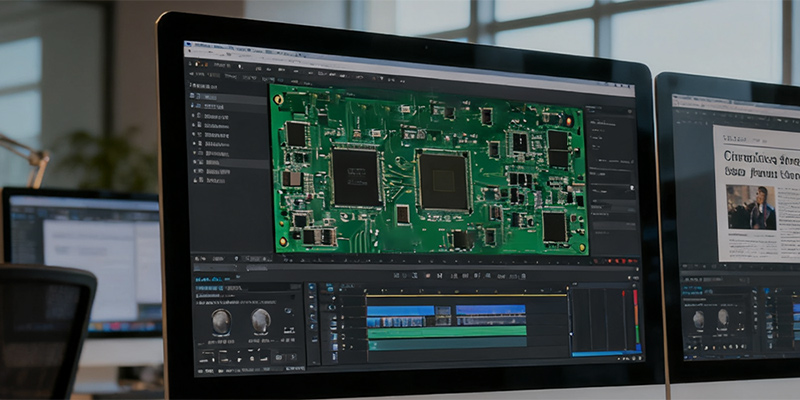
PCB clone drill file export is a key precision link in PCB reverse engineering, which is specially used to restore and generate standard CNC drill files required for PCB mechanical drilling and laser drilling processes. The drill file records all hole feature data on the PCB, including via holes, component through holes, positioning holes, tooling holes, and thermal relief holes, and its accuracy directly affects the hole position accuracy, hole size consistency, and layer alignment precision of cloned PCBs. In multi-layer PCB production, drill files are the core data to realize inter-layer electrical connection and structural positioning, and any data error will lead to layer misalignment, hole deflection, short circuit between layers, and scrapped boards. Therefore, the drill file export process in PCB cloning needs to follow ultra-high precision technical standards and strict error detection procedures.
The drill file generation starts with full-board hole feature scanning and data extraction. Technicians use high-precision industrial scanning equipment to perform full-positioning scanning of the original PCB, accurately capturing the coordinate information (X/Y axis) of all holes, aperture size, hole type attributes, and hole depth parameters. For double-sided and single-sided PCBs, all through-hole data is extracted in full; for multi-layer PCBs, blind holes and buried holes are distinguished and marked independently according to the inter-layer conduction characteristics, and the hole depth and inter-layer penetration range are accurately recorded. In view of the fine-pitch small holes and micro-vias widely used in HDI high-density boards, ultra-high-resolution scanning is adopted to avoid missing tiny hole features, ensuring that all hole features of the original board are fully restored without omission or error.
The core processing link of drill files is data classification, calibration and standard conversion. According to PCB industry production specifications, holes are classified into functional categories: component mounting holes for plug-in components, signal conduction vias for circuit inter-layer connection, positioning holes for board assembly and positioning, and tooling holes for production processing. Different aperture tolerances and process parameters are set for different types of holes. The extracted original hole coordinate data is calibrated and corrected to eliminate coordinate offset and dimensional error caused by scanning distortion and board body deformation. Meanwhile, the data is converted into standard industry formats, mainly including Excellon format drill files, which are the most widely used universal drill file formats in the PCB manufacturing industry, compatible with all CNC drilling machines and laser drilling equipment.
After format conversion, multi-dimensional precision verification and file optimization are carried out. First, the aperture size is unified and standardized, and non-standard aperture sizes of the original board are optimized and adjusted according to the conventional drill bit specifications of PCB factories, avoiding production difficulties caused by special-sized drill bits. Second, the hole position coordinate accuracy is verified one by one, and the distance between adjacent holes, the distance from holes to lines, and the distance from holes to the board edge are detected to meet the safety spacing specifications of PCB production and eliminate short circuit risks. Third, layer correspondence verification is carried out for multi-layer board blind and buried holes to ensure that the penetration layer parameters of each hole are completely consistent with the original circuit design. Finally, the drill file is matched with the Gerber layer file for overall alignment detection to ensure that the hole position corresponds to the wiring and pad positions accurately. The final exported drill file can be directly imported into CNC drilling equipment to complete automatic drilling processing, ensuring that the hole position accuracy of cloned PCBs reaches the industrial high-precision standard, and the hole making consistency is completely consistent with the original sample board.

Email: 15361682656@163.com
Factory: Room 703, Kelunte R&D Building, No. 1 Ganli 5th Road, Jihua Street, Longgang District, Shenzhen City