CN
-
Service Hotline
15766086363


Release Date:Oct 24, 2026
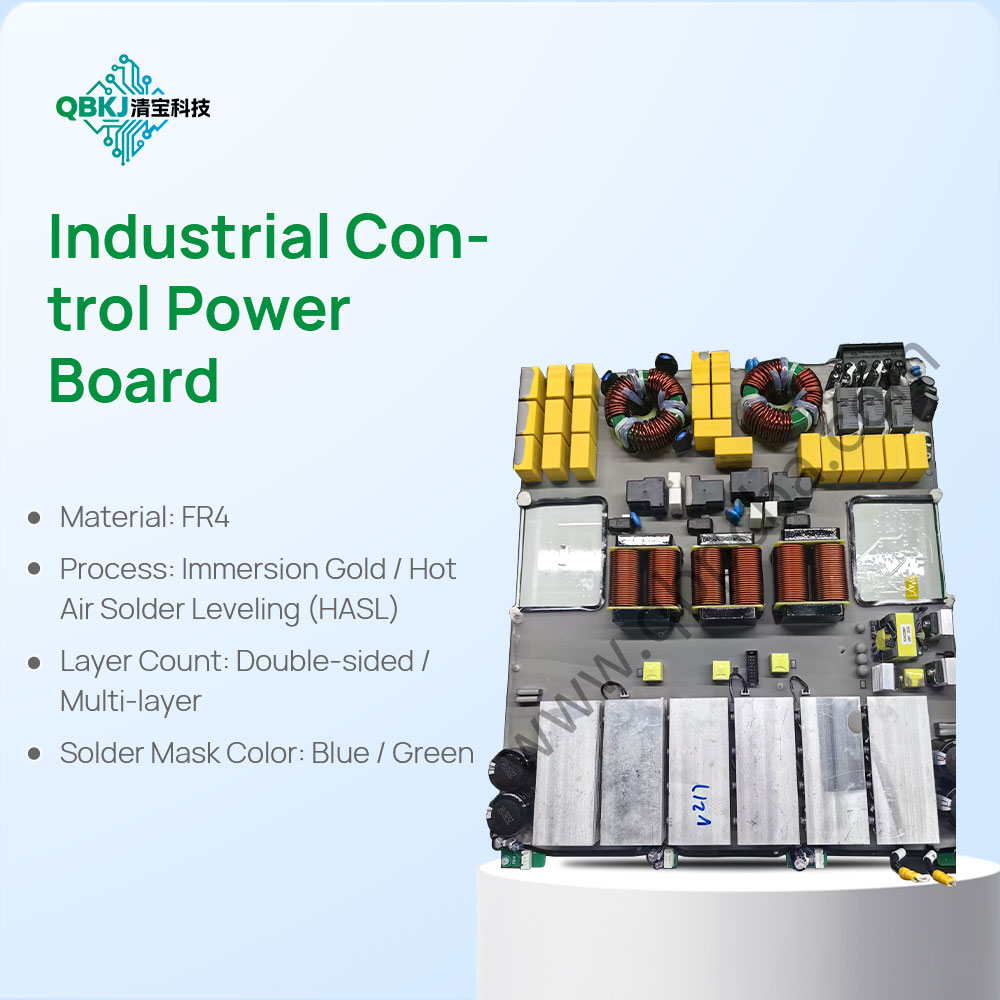
Heavy copper PCB copy service focuses on boards that use copper weights significantly above the standard 1 oz/ft², typically starting at 2 oz/ft² and extending to 10 oz/ft², 20 oz/ft², or even higher for specialized power applications. These boards are used in motor drives, power supplies, inverters, battery management systems, welding equipment, and automotive power electronics. Cloning heavy copper boards is fundamentally different from cloning standard signal boards because the copper itself becomes a mechanical and thermal structure, not just an electrical conductor. The reverse engineering process must capture copper thickness, trace width, spacing, thermal relief patterns, and via construction with high precision, since small errors can lead to overheating, voltage drops, or mechanical failure.
The first challenge in heavy copper PCB copy is accurate measurement of copper weight and trace geometry. Crosssectioning is essential because outer copper plating, inner layer copper, and plated barrel thickness all affect currentcarrying capacity. Etching behavior also differs: heavy copper traces tend to have trapezoidal crosssections rather than rectangular ones, and the clone must account for this in resistance and thermal calculations. Trace width and spacing are often large to handle current, but fine features may still exist for control circuitry. The cloning engineer must therefore map both power and signal regions and apply appropriate manufacturing tolerances. In many cases, the original board uses multiple copper layers connected by large vias or copperfilled holes to distribute current and heat.
Thermal management is central to heavy copper board cloning. Heavy copper traces act as heat spreaders, and the clone must preserve thermal vias, metal core construction, or embedded copper coins where present. Some boards use insulated metal substrate, direct bonded copper, or copperinvarcopper cores to control expansion and heat. If the clone substitutes a different core material, thermal cycling reliability may suffer. The surface finish also matters: HASL is common for heavy copper because it is robust and inexpensive, but immersion gold and immersion silver are used where flatness and corrosion resistance are needed. OSP may be used for shortlife products, though it offers less protection during multiple reflow cycles.
Manufacturing a cloned heavy copper board requires specialized etching, plating, and lamination capabilities. Heavy copper is difficult to etch uniformly, and long etching times can cause undercutting. Plating thick copper into holes requires careful current control and chemistry management. Lamination must avoid resin starvation around thick copper features and ensure good adhesion between layers. Mechanical drilling is harder on heavy copper, so drill parameters and bit selection are critical. After fabrication, the clone should be validated through resistance measurements, currentcarrying tests, thermal imaging, and highpotential isolation testing. A professional heavy copper PCB copy service should also provide a manufacturability review, because not every design can be cloned identically at a different fabricator. In some cases, minor design adjustments are recommended to improve yield without changing electrical performance.

Email: 15361682656@163.com
Factory: Room 703, Kelunte R&D Building, No. 1 Ganli 5th Road, Jihua Street, Longgang District, Shenzhen City