CN
-
Service Hotline
15766086363


Release Date:Jan 22, 2026
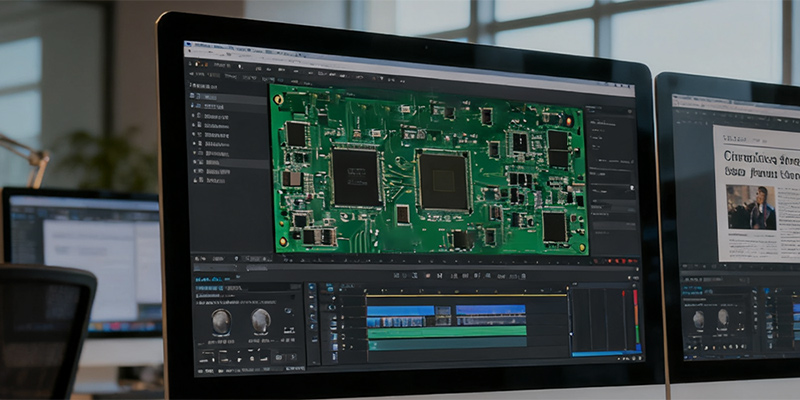
PCBA reverse design extends PCB reverse design by incorporating the analysis and reconstruction of the entire Printed Circuit Board Assembly—including the bare PCB, all mounted components, firmware (if applicable), and their interactions. The goal is to create a comprehensive, editable design package that not only replicates the original PCBA’s functionality but also enables modifications, optimizations, or reengineering to meet new needs (e.g., compliance with updated regulations, integration of new features).
The process starts with component-level analysis: technicians identify each component on the original PCBA (resistors, ICs, sensors) via part numbers, test their specifications (e.g., using an LCR meter for capacitors), and document their roles in the circuit (e.g., a microcontroller’s function as a data processor). For programmable components (e.g., FPGAs, microchips), firmware is extracted and analyzed to understand software logic—this includes decompiling code (where allowed by law) to map input/output functions and control sequences.
Next, the bare PCB is reverse-designed (as detailed in “PCB Reverse Design”) to create a base layout. The component data and firmware logic are then integrated into this design: engineers update the schematic to include component values and connections, adjust the PCB layout to ensure component compatibility (e.g., ensuring a new sensor fits in the original footprint), and optimize the design for performance (e.g., adding copper planes to improve thermal management for high-power components).
For example, a PCBA reverse-designed for a smart home device might have its outdated Wi-Fi module replaced with a newer, more energy-efficient model—requiring adjustments to the schematic (updating pin connections) and layout (relocating the module to maintain signal strength). Firmware is modified to support the new module, ensuring the PCBA retains its original functionality while gaining better performance.
Validation involves building a prototype from the reverse-designed files, testing it for functional consistency with the original (e.g., verifying sensor accuracy, wireless connectivity), and ensuring compliance with industry standards (e.g., RoHS, FCC). PCBA reverse design is a powerful tool for extending the lifespan of legacy products, adapting to new technologies, and reducing costs—making it essential for industries like medical devices (updating old diagnostic equipment) and industrial automation (modernizing control systems).

Email: 1330695973@qq.com
Factory: Room 703, Kelunte R&D Building, No. 1 Ganli 5th Road, Jihua Street, Longgang District, Shenzhen City