CN
-
Service Hotline
15766086363


Release Date:Jan 12, 2026
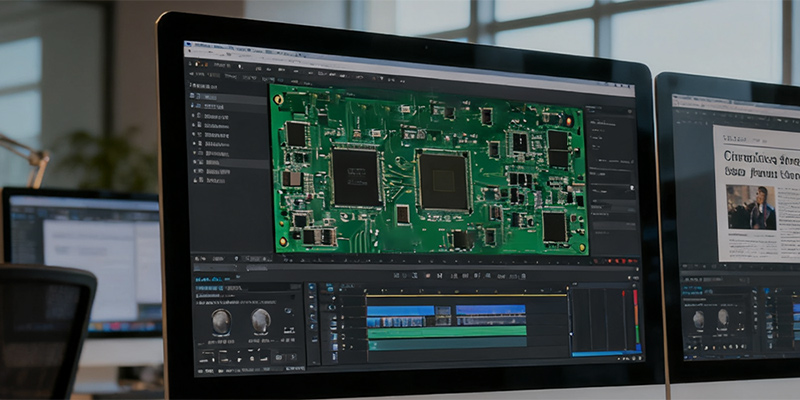
The PCBA clone process is a structured sequence of steps designed to create an exact duplicate of an original Printed Circuit Board Assembly, from initial analysis to final validation. It begins with the analysis phase (as detailed earlier), where the original PCBA’s layout, components, and schematic are dissected and reconstructed—this provides the digital “blueprint” for cloning.
Next is PCB layout replication: using the reconstructed schematic and layout data, engineers use PCB design software (e.g., Altium Designer, KiCad) to create a digital PCB file. This file must precisely match the original’s dimensions, trace widths, pad sizes, and component footprints—even minor discrepancies (like a shifted pad) can cause assembly issues. Once the layout is complete, a prototype PCB is manufactured using the same substrate material and fabrication processes (e.g., etching, drilling) as the original.
Component sourcing and assembly follow: components are procured to match the original BOM (bill of materials), with careful attention to part numbers, specifications, and footprints. For hard-to-find components, equivalent alternatives may be used, but only after verifying compatibility via electrical testing. The prototype PCB is then assembled using surface-mount technology (SMT) or through-hole soldering—matching the original’s assembly method to ensure component placement accuracy.
Post-assembly, the cloned PCBA undergoes initial testing: power-up checks to detect short circuits, continuity testing to verify trace connections, and functional testing to confirm it operates like the original. If issues arise (e.g., a non-functional IC), debugging (as covered earlier) is performed to identify and fix errors (e.g., incorrect component placement). The final step is mass production preparation: once the prototype is validated, the PCB layout and assembly processes are finalized for large-scale manufacturing, with ongoing quality checks to ensure consistency across all cloned units. The PCBA clone process prioritizes precision at every stage to guarantee the final product is indistinguishable from the original in performance and physical design.

Email: 1330695973@qq.com
Factory: Room 703, Kelunte R&D Building, No. 1 Ganli 5th Road, Jihua Street, Longgang District, Shenzhen City