CN
-
Service Hotline
15766086363


Release Date:Jan 12, 2026
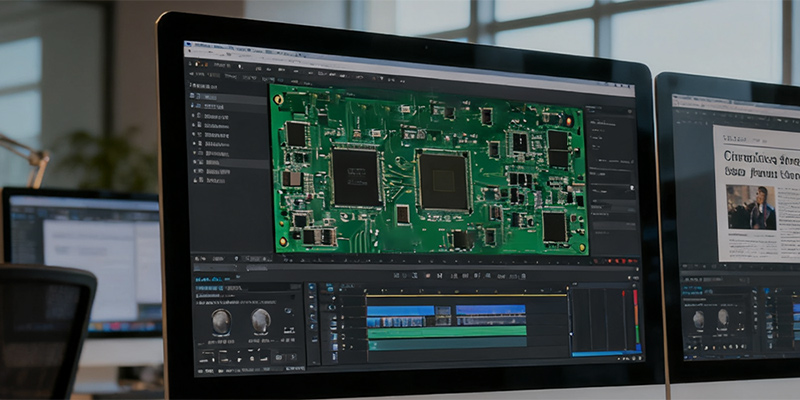
PCBA clone technology encompasses the tools, techniques, and software used to reverse-engineer and replicate original Printed Circuit Board Assemblies, enabling accurate and efficient cloning. At its core are imaging and scanning technologies: high-resolution digital microscopes capture detailed views of PCB surfaces (for trace and pad analysis), while X-ray systems penetrate the PCB to inspect hidden components (e.g., BGA chips) or internal via connections. 3D scanners may also be used to create a 3D model of the PCBA, ensuring precise replication of physical dimensions.
Reverse-engineering software is another key technology: specialized tools (e.g., ScanCAD, ViewMate) convert scanned PCB images into editable digital layouts, automatically tracing trace paths and identifying component footprints. Schematic capture software (e.g., OrCAD) then uses these layouts to build digital schematics, with features like netlist generation to verify electrical connections. For complex PCBs (e.g., those with multi-layer designs), layer peeling technology may be used—carefully removing PCB layers to analyze each layer’s layout individually, then reconstructing the full multi-layer design digitally.
Component identification technology aids in BOM creation: barcode scanners read part numbers from components, while component testers (e.g., LCR meters for capacitors/resistors, IC testers for integrated circuits) verify specifications. For programmable components (e.g., microcontrollers with embedded firmware), firmware extraction tools (using in-circuit programmers) may be used to copy the original firmware—critical for ensuring the cloned PCBA’s software functionality matches the original.
Finally, validation technologies (e.g., automated test equipment, ATE) ensure cloning accuracy: ATE systems run comprehensive tests (continuity, voltage, functionality) to compare the cloned PCBA with the original. Advanced technologies like machine learning may also be integrated into ATE systems to detect subtle discrepancies (e.g., minor signal delays) that manual testing might miss. PCBA clone technology continues to evolve, with faster imaging tools and more intuitive reverse-engineering software reducing cloning time while improving accuracy.

Email: 1330695973@qq.com
Factory: Room 703, Kelunte R&D Building, No. 1 Ganli 5th Road, Jihua Street, Longgang District, Shenzhen City