CN
-
Service Hotline
15766086363


Release Date:Jan 15, 2026
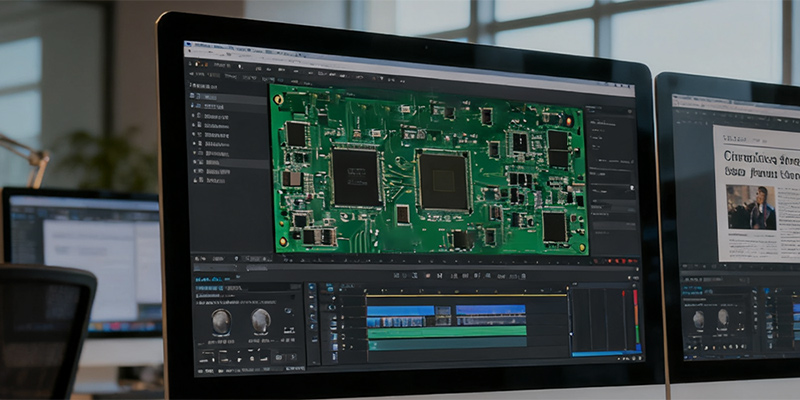
PCBA clone and software development are complementary processes, where software development supports the cloning of PCBs with programmable components (e.g., microcontrollers, FPGAs) by ensuring the cloned hardware has functional software/firmware that matches the original. While standard PCBA cloning focuses on hardware replication, software development becomes critical when the original board relies on custom software to operate.
The collaboration begins during the cloning analysis phase: software developers work with hardware engineers to extract firmware from the original PCB’s programmable components using tools like JTAG debuggers or in-circuit serial programmers. If the firmware is encrypted or proprietary, developers may reverse-engineer the original software’s functionality—documenting input/output behavior, data processing algorithms, and communication protocols—to recreate equivalent software for the cloned board.
Software development for cloned PCBs involves several steps: first, writing or modifying firmware to match the original’s functionality, ensuring compatibility with the cloned hardware’s components (e.g., adjusting GPIO pin configurations to match the PCB’s trace routing). Second, integrating drivers for peripherals (sensors, wireless modules) to ensure the software can communicate with hardware components. Third, testing the software on the cloned PCB to identify bugs—for example, a communication error between the software and a sensor due to incorrect SPI settings.
Software development also plays a role in optimizing the cloned PCBA: developers may update the firmware to fix known issues in the original software, improve performance (e.g., reducing power consumption in battery-powered devices), or add new features (e.g., supporting a new wireless protocol). Documentation is another key part—developers create software manuals, firmware update procedures, and source code repositories to support future maintenance of the cloned PCBA. PCBA clone and software development work together to deliver a fully functional cloned board, where hardware and software perform in harmony as they do in the original.

Email: 1330695973@qq.com
Factory: Room 703, Kelunte R&D Building, No. 1 Ganli 5th Road, Jihua Street, Longgang District, Shenzhen City