CN
-
Service Hotline
15766086363


Release Date:Jan 15, 2026
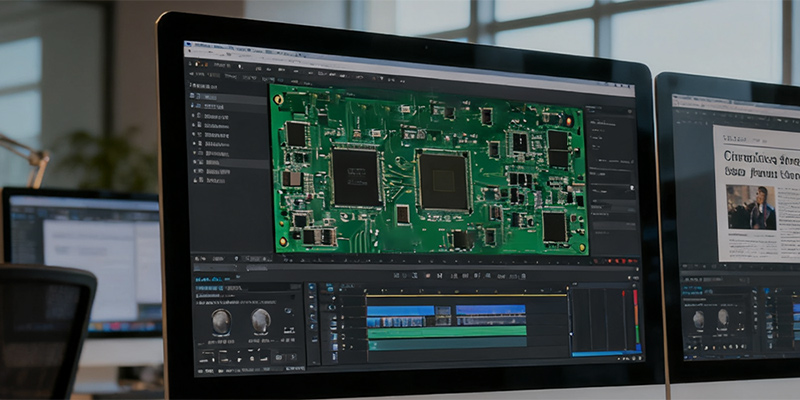
PCBA clone and layout are intertwined processes, where “layout” refers to the physical arrangement of components, traces, and vias on the PCB—and cloning requires replicating this layout with extreme precision to ensure functional consistency with the original board. The layout phase is critical because even small deviations (e.g., a shifted component, a wider trace) can cause performance issues (signal interference, overheating) or render the board incompatible with enclosures.
The process starts with layout extraction: using high-resolution imaging tools (digital microscopes, 3D scanners) and reverse-engineering software (e.g., Altium Designer, KiCad), experts capture the original board’s layout details—including component footprints, trace widths, via sizes/locations, and solder mask boundaries. For multi-layer boards, layer-peeling techniques or X-ray scans are used to map each layer’s layout, ensuring no internal connections are missed.
Next, the extracted layout is reconstructed digitally: engineers create a CAD file that mirrors the original’s every dimension—from the PCB’s overall size to the distance between two adjacent resistors. They pay special attention to critical layout elements: high-speed signal traces (e.g., in IoT or smart home boards) are routed identically to avoid signal distortion; thermal vias (in LED or control boards) are placed to match the original’s heat dissipation pattern; and ground planes are replicated to minimize noise.
Validation is key: the reconstructed layout is cross-referenced with the original board using overlay tools, and a prototype PCB is fabricated to test fit (e.g., component placement matching the original’s enclosure) and function. If discrepancies arise (e.g., a component not fitting), the layout is adjusted and revalidated. PCBA clone and layout demand meticulous attention to detail—this phase ensures the cloned board not only looks like the original but also performs like it, laying the foundation for successful fabrication and testing.

Email: 1330695973@qq.com
Factory: Room 703, Kelunte R&D Building, No. 1 Ganli 5th Road, Jihua Street, Longgang District, Shenzhen City