CN
-
Service Hotline
15766086363


Release Date:Dec 22, 2025
PCBA Copy Design Service is a core offering that transforms a physical PCBA (or prototype) into production-ready digital design files—including schematics, gerber files, BOMs, and assembly drawings. It’s the foundation of all PCBA copy work, as accurate design files are essential for fabricating functional clones. Unlike generic design services, this service prioritizes replicating the original’s form, fit, and function while ensuring manufacturability.
Key design deliverables and processes include:
Schematic Design: Recreating a detailed circuit schematic that maps all components, connections, and signal paths. Engineers trace the original PCB (via multimeter, logic analyzer) to document how parts interact—e.g., power flow from regulators to ICs, signal paths from sensors to microcontrollers. The schematic includes component values, part numbers, and pinout details for clarity.
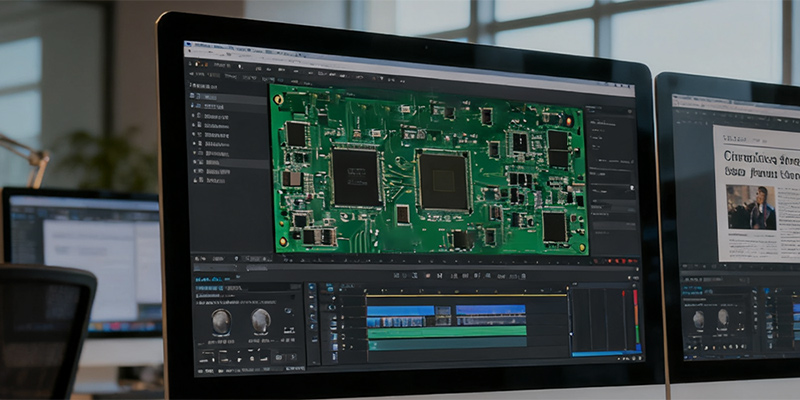
PCB Layout Design: Using PCB design software (Altium Designer, KiCad) to replicate the original’s physical layout. This includes:
Component Placement: Matching the original’s X/Y coordinates and rotation for all parts (ensuring compatibility with enclosures and connectors). For SMT components, footprint libraries are used to ensure accurate sizing.
Trace Routing: Replicating trace widths, spacing, and paths—including impedance-controlled traces (for high-speed signals) and thermal vias (for heat dissipation). Multi-layer PCBs have internal layers mapped via X-ray to ensure correct layer stack-up.
Manufacturing Details: Adding fiducial marks (for SMT alignment), solder mask openings (matching original), and silkscreen markings (part numbers, logos) to ensure production compatibility.
BOM Creation: Developing a comprehensive BOM with component part numbers, manufacturers, quantities, package types, and sourcing information. Obsolete parts are flagged, and alternatives are suggested with compatibility notes.
Design Validation: Checking the design for errors (e.g., short circuits, missing connections) via design rule checks (DRCs) in software. Prototypes are fabricated to test the design, with revisions made to fix discrepancies (e.g., misaligned components, signal delays).
This service provides clients with actionable design files that can be used for repeated production. Providers ensure designs meet industry standards (IPC-2221 for layout, IPC-A-600 for PCB quality) and are compatible with common manufacturing processes (SMT, wave soldering).

Email: 1330695973@qq.com
Factory: Room 703, Kelunte R&D Building, No. 1 Ganli 5th Road, Jihua Street, Longgang District, Shenzhen City