CN
-
Service Hotline
15766086363


Release Date:Dec 17, 2025
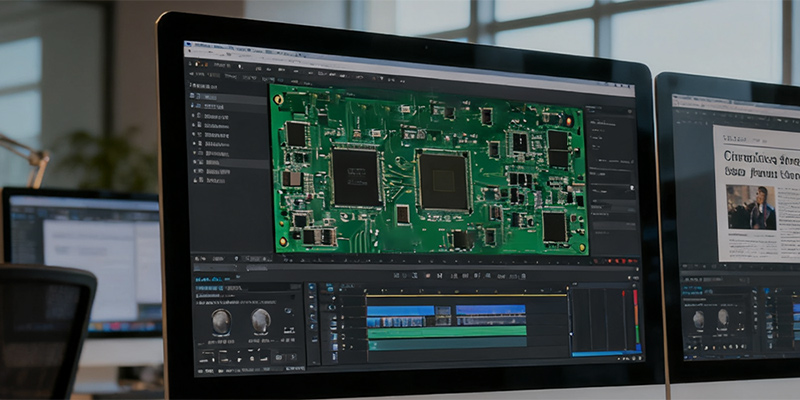
PCBA Copy Technology refers to the suite of tools, methodologies, and techniques used to reverse-engineer and replicate a physical PCBA into a functional, identical clone—without relying on original design files. This technology is the backbone of all PCBA copy services, enabling accurate replication of PCBs across industries (from consumer electronics to aerospace) and complexity levels (from 2-layer to 32-layer high-density boards). It combines hardware tools for data capture, software for digital design recreation, and validation techniques to ensure functional equivalence.
At its core, PCBA Copy Technology consists of three key pillars:
Physical Data Capture Technology: This layer focuses on extracting every detail from the original PCBA. Key tools include:
High-Resolution Optical Scanners: With 1–5 micron resolution, these scanners capture top/bottom layer traces, silkscreen markings, and component placement—creating pixel-perfect digital images. Advanced models use multi-angle scanning to avoid shadow distortion, critical for fine-pitch components (e.g., 01005 passives, 0.4mm-pitch BGAs).
X-ray Imaging Systems: Essential for multi-layer PCBs and hidden connections, X-ray machines penetrate the PCB to map internal layers, via positions, and BGA solder ball layouts. Digital X-ray systems with 3D reconstruction capabilities enable engineers to analyze complex layer stack-ups (e.g., blind/buried vias) without damaging the original board.
Component Identification Tools: For unmarked or partially marked components (e.g., resistors with faded value codes), tools like X-ray fluorescence (XRF) analyzers verify material composition (e.g., lead-free compliance), while component testers measure electrical properties (resistance, capacitance, inductance) to confirm specifications.
Digital Design Recreation Technology: This pillar converts physical data into production-ready digital files. Key elements include:
PCB Reverse Engineering Software: Industry-standard tools like Altium Designer, KiCad, and Mentor Graphics PADS include features tailored for copy—such as automated trace routing (matching scanned trace paths), layer stack-up editors (replicating original layer thickness and material), and component footprint libraries (ensuring compatibility with scanned component packages). AI-powered plugins (e.g., Altium’s CircuitMaker AI) accelerate trace recognition by 30–50% compared to manual tracing.
Schematic Capture Tools: These tools help engineers map signal paths (verified via multimeter or logic analyzer) into circuit schematics, documenting how components interact. Advanced tools include netlist generation features, which cross-check schematic connections against scanned trace data to avoid errors.
Validation Technology: This ensures the cloned design matches the original’s functionality. Key technologies include:
Electrical Testing Equipment: Multimeters (for continuity/voltage checks), oscilloscopes (for signal integrity analysis), and logic analyzers (for digital signal mapping) verify that the cloned design’s electrical performance aligns with the original.
Functional Testing Platforms: Custom test jigs or automated test equipment (ATE) simulate real-world operating conditions (e.g., input voltages, loads) to confirm the cloned PCBA behaves identically to the original. For firmware-dependent PCBs, in-circuit programmers and firmware analyzers validate that extracted code runs correctly on the cloned hardware.
Key advancements in PCBA Copy Technology include 3D X-ray reconstruction (for complex multi-layer boards) and AI-driven trace recognition (reducing reverse engineering time). When evaluating technology capabilities, prioritize providers with access to state-of-the-art tools (e.g., 3D X-ray systems, AI software) and expertise in applying them to diverse PCB types—ensuring accuracy even for high-complexity designs.

Email: 1330695973@qq.com
Factory: Room 703, Kelunte R&D Building, No. 1 Ganli 5th Road, Jihua Street, Longgang District, Shenzhen City