CN
-
Service Hotline
15766086363


Release Date:Mar 25, 2026
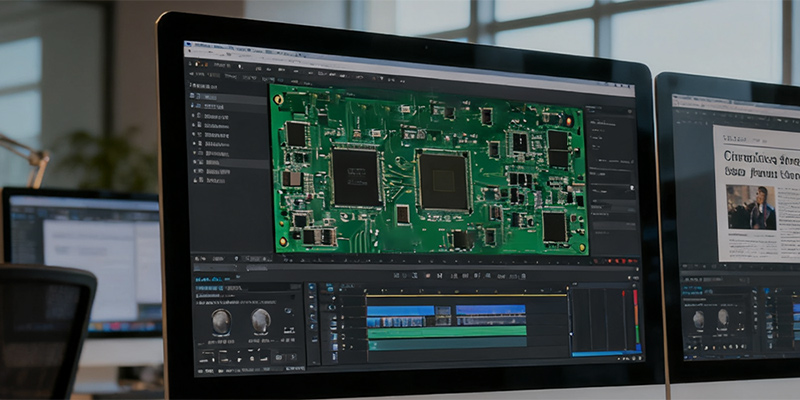
Security monitoring PCBA SMT (Surface Mount Technology) processing is a critical link in the manufacturing of security monitoring equipment, providing the core electronic components that enable real-time video surveillance, motion detection, data transmission, and remote control. With the rapid development of the security industry, modern security monitoring systems have evolved from simple analog cameras to intelligent, networked devices with high-definition imaging, AI-based analytics, and 24/7 continuous operation. As a result, the requirements for PCBA SMT processing in security monitoring applications have become increasingly stringent, demanding high precision, high reliability, fast production efficiency, and compatibility with a wide range of components—from small passive components (0402 size resistors and capacitors) to large integrated circuits (ICs) and communication modules.
The core of security monitoring PCBA SMT processing lies in the precision and efficiency of the surface mount process, which involves mounting electronic components directly onto the surface of the PCB (Printed Circuit Board) using automated equipment. This process offers several advantages over traditional through-hole technology, including smaller PCB size, higher component density, faster production speed, and lower manufacturing costs—all of which are essential for the mass production of security monitoring devices such as IP cameras, DVRs (Digital Video Recorders), NVRs (Network Video Recorders), and motion sensors. To meet the specific needs of security monitoring applications, SMT processing must adhere to strict quality standards and process controls to ensure the reliability and stability of the final product, as security equipment is often required to operate continuously for years in harsh environments such as outdoor locations, high-temperature areas, and high-humidity environments.
The SMT processing workflow for security monitoring PCBA typically includes four key stages: PCB preparation, solder paste printing, component placement, and reflow soldering, followed by rigorous inspection and testing. The first stage, PCB preparation, involves cleaning the PCB surface to remove any contaminants (such as dust, oil, or oxide) that could affect the soldering quality. The PCB is then coated with a solder mask to protect the copper traces and prevent short circuits, and solder paste is applied to the焊盘 (pads) using a stencil printer. The stencil printer uses a precision steel stencil with openings corresponding to the PCB pads, ensuring that the correct amount of solder paste is applied with high accuracy—typically within ±0.025mm. This step is critical for ensuring good solder joint quality, as insufficient or excessive solder paste can lead to defects such as cold solder joints, solder bridges, or tombstoning.
The component placement stage is performed using high-speed SMT placement machines, which use vacuum nozzles to pick up components from feeders and place them accurately onto the PCB pads. These machines are equipped with advanced vision recognition systems that can identify component types, sizes, and orientations, ensuring that each component is placed in the correct position with a placement accuracy of ±0.05mm for precision ICs. For security monitoring PCBA, this precision is essential, as the components (such as image sensors, microcontrollers, and communication modules) are often highly integrated and require precise alignment to function properly. The placement machines can handle a wide range of component sizes, from 0402 passive components to large BGA and QFP packages, and can achieve placement speeds of up to 200,000 components per hour, enabling mass production.
After component placement, the PCB is sent to a reflow oven for soldering. The reflow oven uses a precise temperature profile (typically 12 temperature zones) to heat the PCB and solder paste, causing the solder to melt and form a strong metallurgical bond between the components and the PCB pads. The temperature profile is carefully calibrated to ensure that the solder paste melts completely without damaging the components or the PCB, and the cooling process is controlled to prevent thermal stress and solder joint defects. For security monitoring PCBA, the reflow soldering process must be strictly controlled to ensure that the solder joints are strong, reliable, and resistant to thermal cycling and vibration—critical for equipment operating in outdoor or harsh environments.
Inspection and testing are essential steps in security monitoring PCBA SMT processing to ensure that the final product meets the required quality standards. Automated inspection equipment such as AOI (Automatic Optical Inspection) is used to scan the PCB after reflow soldering, detecting defects such as missing components, misaligned components, solder bridges, and cold solder joints. For complex components such as BGA packages, X-Ray inspection is used to check for internal solder joint defects that cannot be detected by AOI. In addition to visual inspection, electrical testing (such as ICT—In-Circuit Test and FCT—Functional Circuit Test) is performed to verify the electrical performance of the PCBA, ensuring that all components are functioning correctly and that the circuit meets the design specifications. These tests simulate the actual operating conditions of the security monitoring equipment, ensuring that the PCBA can withstand continuous operation and perform reliably in real-world scenarios.
To meet the specific requirements of security monitoring applications, SMT processing for security monitoring PCBA also incorporates several specialized measures. For example, the PCB is often designed with a large ground plane to reduce EMI (Electromagnetic Interference), which can affect the performance of sensitive components such as image sensors and communication modules. Additionally, the use of high-quality solder paste (such as lead-free solder paste compliant with RoHS standards) ensures that the product is environmentally friendly and meets international regulations. The production environment is also strictly controlled, with a Class 10,000 cleanroom to prevent dust and contaminants from affecting the SMT process, and electrostatic discharge (ESD) protection measures to prevent damage to sensitive electronic components.
In conclusion, security monitoring PCBA SMT processing is a highly precise and efficient manufacturing process that plays a critical role in the production of reliable, high-performance security monitoring equipment. By adhering to strict quality standards, using advanced SMT equipment, and implementing rigorous inspection and testing procedures, manufacturers can produce PCBA that meets the demanding requirements of modern security systems. As the security industry continues to evolve with the integration of AI, IoT, and 5G technologies, the demand for high-precision, high-reliability SMT processing will only increase, driving continuous innovation in equipment, materials, and processes.

Email: 15361682656@163.com
Factory: Room 703, Kelunte R&D Building, No. 1 Ganli 5th Road, Jihua Street, Longgang District, Shenzhen City