CN
-
Service Hotline
15766086363


Release Date:Mar 09, 2026
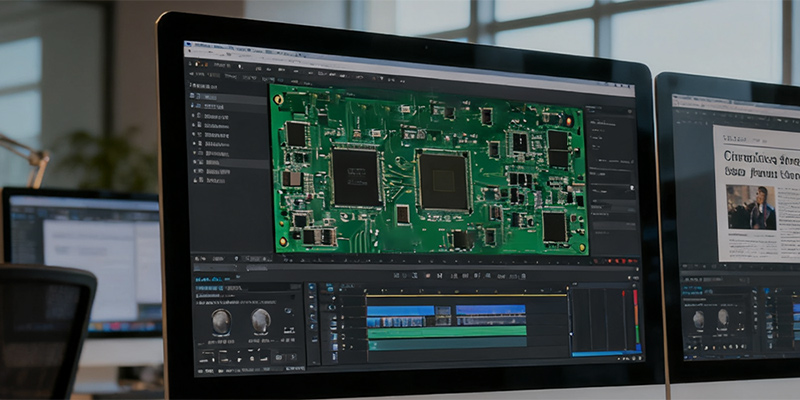
Reverse Engineering Optimization leverages reverse engineering to streamline the design, manufacturing, or performance of products, PCBs, or PCBAs—focusing on reducing costs, improving efficiency, or enhancing scalability while preserving core functionality. Unlike reverse engineering improvement (which targets feature enhancements), optimization prioritizes refining existing designs to eliminate waste, reduce complexity, or align with manufacturing capabilities, making it essential for mass production, cost-sensitive projects (e.g., consumer electronics), or scaling legacy designs for new markets.
The workflow starts with Cost & Efficiency Audit: Engineers reverse-engineer the target item to map inefficiencies—such as a PCB using 10 layers when 8 suffice (increasing material costs), a PCBA with custom components that have long lead times, or a manufacturing process requiring manual soldering for parts that could be assembled via SMT. Tools like DFM (Design for Manufacturing) software analyze reversed PCB layouts to spot issues like non-standard trace widths that slow production.
Next is Optimization Goals: Objectives are defined to address pain points—e.g., reducing a PCB’s layer count by 20% to cut material costs, replacing 3 custom PCBA components with off-the-shelf alternatives to shorten lead times by 50%, or optimizing a PCB’s trace routing to enable full automation of assembly. These goals balance performance (e.g., maintaining signal integrity with fewer PCB layers) and practicality (e.g., using readily available components).
Then comes Design Refinement: Using reversed data, engineers implement changes. For PCBs, this might involve re-routing traces to eliminate unnecessary layers, standardizing pad sizes to match automated assembly equipment, or consolidating discrete components into integrated modules (e.g., a single power management IC replacing 5 separate regulators). For PCBAs, it could mean sourcing components from multiple suppliers to reduce supply chain risk, or adjusting component placement to minimize solder joint defects during reflow.
Finally, Validation & Scaling: The optimized design is prototyped and tested to confirm it meets performance benchmarks (e.g., signal integrity remains intact with 8 PCB layers) and manufacturing requirements (e.g., SMT machines can efficiently place components). Cost audits verify savings—such as a 15% reduction in PCB production costs—and scalability tests ensure the design can be mass-produced without quality issues. Challenges include balancing optimization with reliability (e.g., fewer PCB layers not compromising thermal dissipation) and ensuring changes don’t require expensive new manufacturing equipment. This process is critical for maximizing profitability and competitiveness in high-volume markets.

Email: 15361682656@163.com
Factory: Room 703, Kelunte R&D Building, No. 1 Ganli 5th Road, Jihua Street, Longgang District, Shenzhen City