CN
-
Service Hotline
15766086363


Release Date:Mar 19, 2026
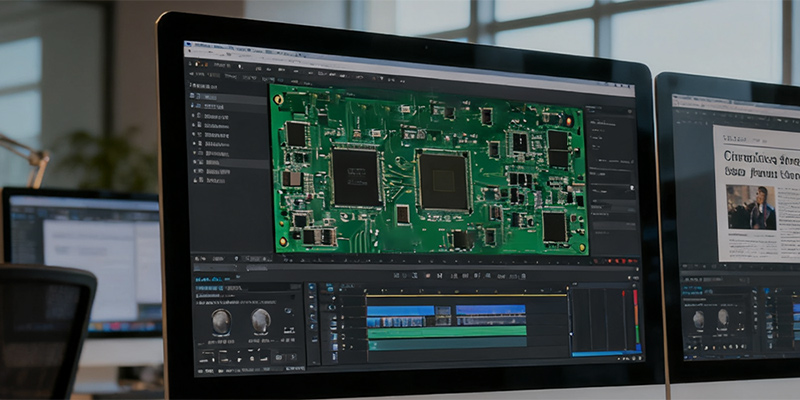
PCBA clone automation revolutionizes the process of replicating printed circuit board assemblies by leveraging advanced technology to minimize manual effort, enhance precision, and accelerate production—all while ensuring the cloned PCBA matches the original’s functionality and quality. The automation workflow begins with reverse engineering automation: high-resolution optical scanners and X-ray systems capture detailed images of the original PCBA’s component layout, trace paths, and solder joints. Specialized software then analyzes these images to automatically generate accurate BOMs (Bill of Materials), Gerber files, and pick-and-place machine programs, eliminating errors from manual data entry.
In assembly, automated pick-and-place machines—equipped with vision-guided systems—retrieve components from pre-organized feeders and place them on the cloned PCBs with sub-millimeter accuracy, handling hundreds of components per minute. This replaces slow, error-prone manual placement, especially critical for tiny SMD (Surface Mount Device) components. Soldering is automated via reflow ovens with computer-controlled temperature profiles, calibrated to the original PCBA’s solder alloy to ensure consistent, reliable joints.
Post-assembly, automation continues with testing: automated optical inspection (AOI) systems scan each PCBA in seconds to detect soldering defects (e.g., bridges, voids), while in-circuit test (ICT) fixtures with multi-point probes simultaneously verify component functionality and electrical continuity across multiple units. Functional testing is also automated using custom test benches that simulate real-world operating conditions, generating pass/fail results instantly.
Data integration is a cornerstone of PCBA clone automation: production management software syncs data from scanning, assembly, and testing stages, providing real-time visibility into production progress and defect rates. This allows for immediate adjustments—such as recalibrating pick-and-place machines if misplacement is detected—ensuring consistent quality at scale. By streamlining every step, PCBA clone automation reduces lead times, cuts labor costs, and minimizes human error, delivering high-fidelity clones efficiently.

Email: 15361682656@163.com
Factory: Room 703, Kelunte R&D Building, No. 1 Ganli 5th Road, Jihua Street, Longgang District, Shenzhen City