CN
-
Service Hotline
15766086363


Release Date:Mar 18, 2026
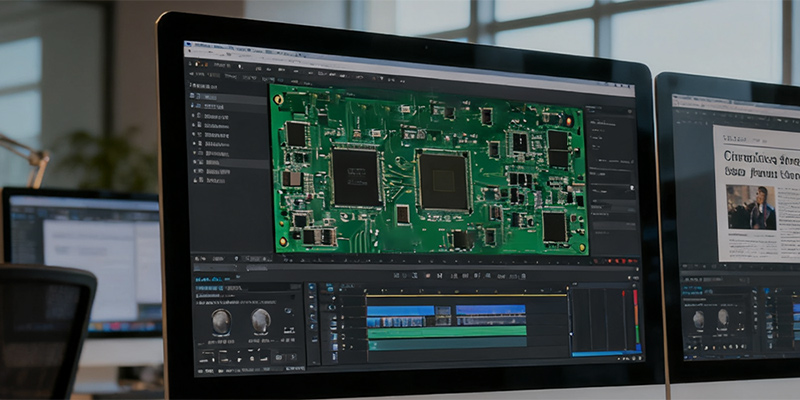
PCB copy automation uses advanced technology and equipment to streamline the cloning process of printed circuit boards, reducing manual intervention, improving precision, and increasing production efficiency—all while ensuring the copied PCB matches the original’s specifications. The automation journey starts with data acquisition: instead of manual measurement of the original PCB (which is time-consuming and error-prone), automated optical scanning systems capture high-resolution images of each layer. Software then converts these images into accurate Gerber files, detecting trace widths, pad sizes, and hole positions with tolerances as tight as ±0.01mm—far exceeding manual capabilities.
In production, automation dominates key stages. Automated drilling machines (equipped with CNC technology) drill holes in PCBs at high speeds, using the scanned Gerber files to ensure hole positions and diameters match the original exactly. During etching, automated lines control chemical concentrations, temperature, and processing time with precision, ensuring consistent trace thickness and edge clarity. This eliminates the variability of manual etching, where slight changes in chemical mix can lead to over-etched or under-etched traces.
Solder mask application is automated using screen-printing machines with computerized alignment, ensuring uniform coverage and accurate placement over pads and traces. After application, automated UV curing ovens precisely control curing time and temperature, guaranteeing the solder mask’s adhesion and durability.
Inspection is also automated. Automated optical inspection (AOI) systems scan PCBs after each production step, using machine learning algorithms to detect defects like missing traces, misaligned holes, or uneven solder mask. X-ray inspection systems (for multi-layer PCBs) check internal layer alignments and hidden defects, which manual inspection cannot detect.
Data integration ties all automated systems together. Production software collects data from scanning, drilling, etching, and inspection equipment, providing real-time visibility into the process. This allows for immediate adjustments—e.g., if the AOI system detects a trend of misaligned holes, the drilling machine’s parameters can be corrected remotely. By reducing manual error, increasing speed, and ensuring precision, PCB copy automation delivers high-quality, consistent cloned PCBs at scale.

Email: 15361682656@163.com
Factory: Room 703, Kelunte R&D Building, No. 1 Ganli 5th Road, Jihua Street, Longgang District, Shenzhen City