CN
-
Service Hotline
15766086363


Release Date:Mar 11, 2026
The PCB Clone Production Process is a systematic workflow to create identical physical replicas (clones) of a target PCB by extracting design data via reverse engineering, then fabricating copies that match the original’s form, fit, and electrical performance. Unlike standard PCB production (relying on original Gerber files), this process addresses scenarios where original design documents are lost, obsolete, or unavailable—critical for replacing legacy PCBs in industrial machinery, aerospace equipment, or medical devices.
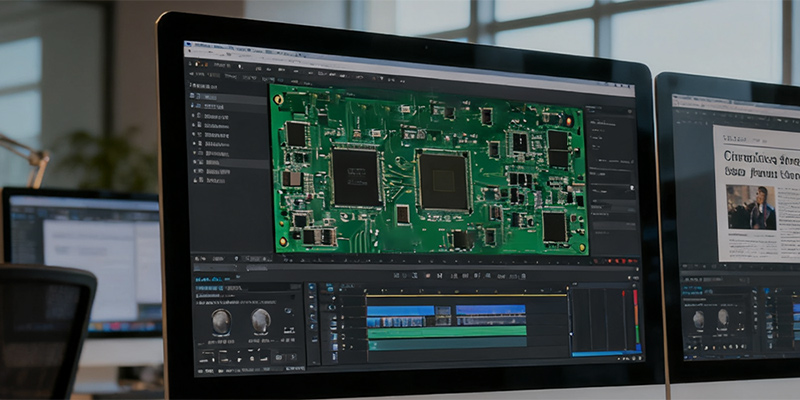
The process begins with Reverse Engineering of the Original PCB: Technicians use high-resolution cameras and 3D scanners to capture the original’s physical dimensions (length, width, thickness) and component footprints. For multi-layer PCBs, non-destructive X-ray tomography or destructive chemical etching exposes inner layers, allowing trace routing, via positions, and layer stackup (dielectric material, copper thickness) to be mapped. This data is converted into editable design files (Gerber, drill files) using PCB software (e.g., Altium, KiCad), with strict adherence to IPC standards (e.g., IPC-2221 for trace width) to ensure accuracy.
Next is Design Validation: The reversed files are cross-validated against the original PCB—overlay analysis checks trace alignment and pad sizes, while DFM (Design for Manufacturing) tools identify potential fabrication issues (e.g., overly narrow traces). Adjustments are made for discrepancies: for example, resizing a via that’s 0.05mm off-spec in the reversed file.
Material sourcing follows, with Component & Substrate Matching: Substrate material (e.g., FR-4 for standard use, Rogers for high-frequency PCBs), copper cladding (1oz/2oz), and surface finish (ENIG, HASL) are selected to match the original’s electrical and thermal properties. Material testing (e.g., dielectric strength for substrates) confirms compatibility.
Fabrication proceeds in standard PCB steps but with cloned data: Substrate Cutting (to original dimensions), Copper Lamination, Photolithography (transferring reversed trace patterns), Etching (removing excess copper), Drilling (vias/mounting holes per drill files), Plating (copper coating for conductivity), and Surface Finishing.
Finally, Quality Control: Cloned PCBs undergo AOI (Automated Optical Inspection) for trace defects, X-ray for via integrity, continuity testing (no open/short circuits), and impedance testing (matching original signal performance). Only PCBs passing all tests are approved. Challenges include replicating obsolete materials (e.g., discontinued substrates) and maintaining tight tolerances for high-density PCBs (0.4mm pitch BGAs). This process ensures reliable, identical PCB clones for critical applications.

Email: 15361682656@163.com
Factory: Room 703, Kelunte R&D Building, No. 1 Ganli 5th Road, Jihua Street, Longgang District, Shenzhen City