CN
-
Service Hotline
15766086363


Release Date:Jan 28, 2026
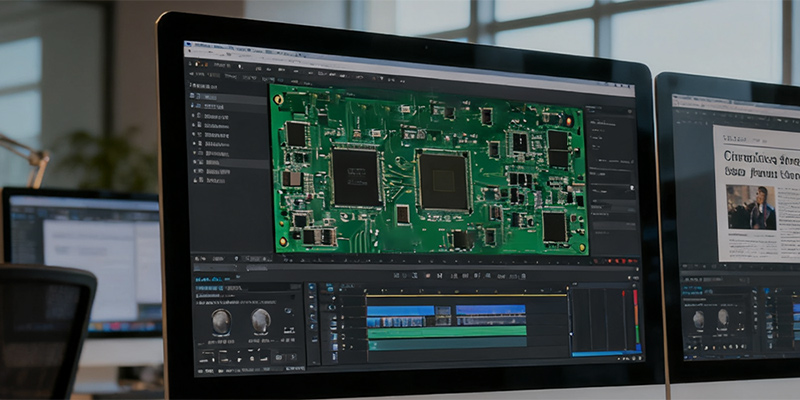
Reverse Engineering for PCB Testing is a specialized application of reverse engineering that focuses on extracting design data to develop effective testing strategies—ensuring PCBs meet performance, reliability, and compliance standards. Unlike general reverse engineering (which aims to replicate or modify PCBs), this use case prioritizes uncovering hidden design details that are critical for accurate testing, especially when original test plans or design files are lost or unavailable.
The process starts with Design Data Extraction: Technicians reverse-engineer the PCB to map trace routes, identify component footprints, and document layer stackups—using tools like 3D scanners (for physical dimensions) and circuit tracers (for electrical connections). This data reveals key testing points (e.g., test pads, voltage nodes) and potential failure points (e.g., narrow traces prone to overheating, high-stress vias).
Next is Test Requirement Analysis: Using the reversed design, engineers identify test criteria aligned with industry standards (e.g., IPC-9252 for PCB testing) and application needs (e.g., thermal cycling for automotive PCBs, vibration testing for aerospace PCBs). For example, reversed trace width data helps determine current-carrying capacity tests, while layer stackup details inform dielectric breakdown testing.
Then, Test Plan Development: The reversed design is used to create detailed test procedures, including which test points to access, what instruments to use (e.g., multimeters for continuity, oscilloscopes for signal integrity), and what pass/fail criteria to apply. For multi-layer PCBs, reversed inner-layer data ensures tests account for hidden connections that could cause false failures.
Finally, Test Validation: The test plan is executed on sample PCBs, with results cross-referenced against the reversed design to confirm accuracy. Adjustments are made if tests fail to detect known issues (e.g., short circuits) or produce false positives. This approach is critical for legacy PCB testing (where original test plans are obsolete), custom PCB validation (for new designs), and failure analysis (to identify root causes of PCB malfunctions). Challenges include accessing hidden test points (requiring specialized probing tools) and ensuring tests do not damage the PCB, requiring a balance of technical expertise and careful planning.

Email: 1330695973@qq.com
Factory: Room 703, Kelunte R&D Building, No. 1 Ganli 5th Road, Jihua Street, Longgang District, Shenzhen City