CN
-
Service Hotline
15766086363


Release Date:Dec 27, 2025
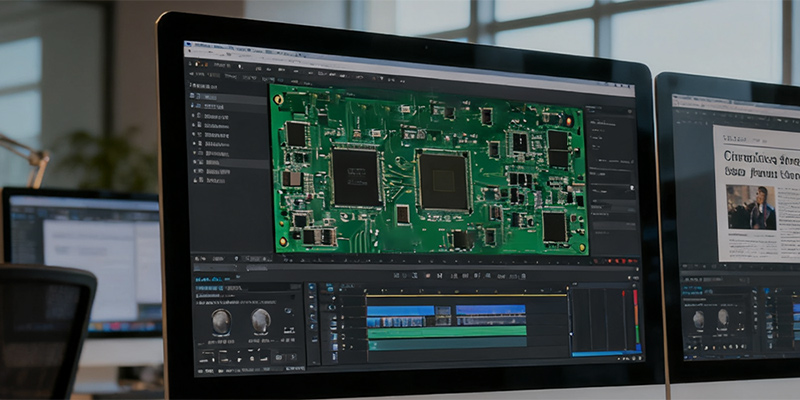
PCBA clone and reengineering work in tandem to replicate existing Printed Circuit Board Assemblies while also optimizing or updating them to address limitations, improve performance, or align with modern technologies. PCBA cloning forms the foundation: it involves reverse-engineering the original PCBA to create an exact copy, including replicating the PCB layout, schematic, and BOM. This step requires precise imaging of the original board (using tools like 3D scanners or PCB reverse-engineering software), component identification (even for obsolete parts), and validation to ensure the cloned board matches the original’s form, fit, and function.
Reengineering, however, takes the cloned PCBA further by introducing intentional changes. The goal here is to enhance the design rather than just replicate it. For instance, if the original PCBA uses outdated components that are hard to source, reengineering might involve replacing them with newer, more readily available alternatives that offer better performance or lower costs. Engineers might also optimize the PCB layout to reduce signal interference—for example, rearranging traces in a high-frequency communication board—or improve thermal efficiency by adding copper planes or adjusting component placement.
Another key aspect of reengineering is adapting the PCBA to new requirements. For example, a cloned industrial PCBA might be reengineered to support additional communication protocols (like Ethernet/IP) or comply with updated safety standards (such as IEC 61508 for functional safety). Reengineering can also involve simplifying the design to reduce manufacturing complexity, such as merging multiple discrete components into a single integrated circuit (IC).
Throughout the process, close collaboration between cloning and reengineering teams is essential. The cloned PCBA serves as a baseline, allowing engineers to test reengineering changes incrementally—for example, modifying one component at a time and testing functionality to ensure no unintended issues arise. This combined approach offers significant benefits: it leverages the proven design of the original PCBA (reducing development risk) while enabling improvements that make the product more competitive, reliable, or suitable for evolving market needs. Whether for legacy system maintenance (cloning to keep old equipment running) or product innovation (reengineering to create a better version), PCBA clone and reengineering provide a flexible solution for businesses looking to balance familiarity and progress.

Email: 1330695973@qq.com
Factory: Room 703, Kelunte R&D Building, No. 1 Ganli 5th Road, Jihua Street, Longgang District, Shenzhen City