CN
-
Service Hotline
15766086363


Release Date:Dec 27, 2025
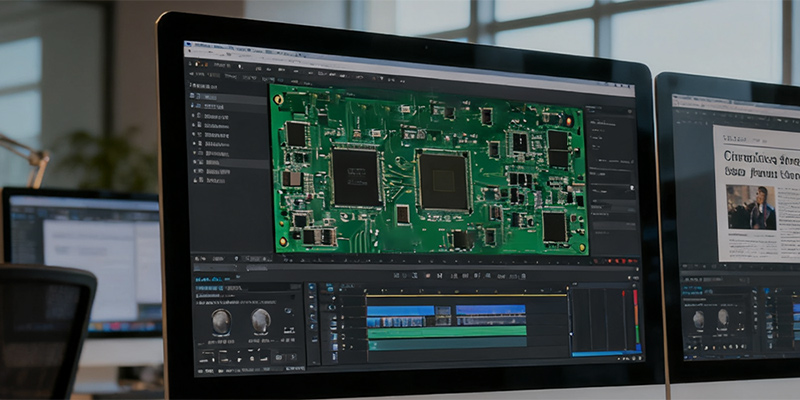
PCBA clone analysis is the foundational step in replicating a Printed Circuit Board Assembly, focusing on dissecting the original board to extract every critical detail needed for accurate cloning. This process starts with physical teardown—carefully disassembling the original PCBA to access individual components without damaging traces or solder joints. Technicians then use high-resolution imaging tools (such as digital microscopes or X-ray machines for hidden components) to capture the PCB’s layout, including trace paths, pad positions, and via locations.
Component analysis is a core part: each component (resistors, capacitors, ICs, etc.) is identified by reading part numbers, checking footprints, and verifying electrical specifications (e.g., voltage ratings for capacitors). For obsolete components or those with unreadable markings, reverse-engineering techniques like circuit tracing (using a multimeter to map electrical connections) may be used to determine component values or functions. Schematic reconstruction follows, where the analyzed connections and components are organized into a digital schematic using CAD software—this schematic must match the original PCBA’s electrical behavior to ensure cloning accuracy.
Additionally, material analysis is often conducted: testing the PCB substrate (e.g., FR-4) to confirm thermal and mechanical properties, and checking solder alloy composition to match manufacturing standards. The final step in analysis is validation—cross-referencing the reconstructed schematic and layout with the original PCBA’s functionality (e.g., testing key signal paths) to ensure no details are missed. Thorough PCBA clone analysis eliminates guesswork in later cloning stages, reducing errors and ensuring the cloned board matches the original’s form, fit, and function.

Email: 1330695973@qq.com
Factory: Room 703, Kelunte R&D Building, No. 1 Ganli 5th Road, Jihua Street, Longgang District, Shenzhen City