CN
-
Service Hotline
15766086363


Release Date:Dec 03, 2025
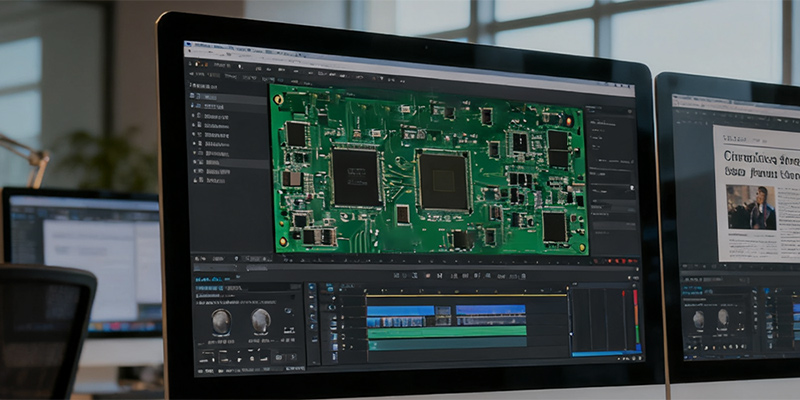
PCBA Copy and Test is an integrated service that combines reverse engineering of an original PCBA with comprehensive testing of the cloned version, ensuring the final product matches the original’s functionality, performance, and reliability. Unlike standalone PCBA copy (which focuses solely on replication) or isolated testing (which verifies existing PCBs), this service unifies the two processes—using test data from the original PCBA to guide replication, then validating the clone against that baseline. It is critical for industries where performance consistency is non-negotiable, such as automotive (engine control units), medical devices (diagnostic equipment), and industrial automation (process controllers), where even minor deviations can cause system failures.
The service workflow starts with baseline testing of the original PCBA—a foundational step to capture the original’s performance parameters. Engineers use specialized equipment to conduct electrical tests (continuity, resistance, voltage/current measurements) to map signal paths and identify critical components; functional tests (simulating real-world operating conditions) to record key outputs (e.g., sensor readings, motor control signals); and performance tests (using oscilloscopes for signal integrity, power analyzers for energy efficiency) to document metrics like response time, noise levels, and thermal behavior. For environmental resilience, the original PCBA may also undergo stress tests (temperature cycling, vibration) to establish durability benchmarks. All data is compiled into a “test specification document” that guides the copy process.
Next, reverse engineering and clone fabrication proceed with the test baseline in mind. The team replicates the PCBA’s layout (gerber files), component placement, and BOM, ensuring critical elements (e.g., high-speed signal traces, power regulators) are identical to the original. During fabrication, components are sourced to match the original’s specifications (or qualified alternatives, with additional testing to confirm compatibility). Once the cloned PCBA is assembled, comparative testing begins—engineers run the same suite of tests used on the original, comparing results side-by-side. For example, if the original PCBA’s sensor output ranges from 0.5V to 4.5V under load, the clone must meet that range; if the original withstands 1000 vibration cycles, the clone is tested to the same standard.
Specialized testing is added based on industry requirements: EMC (Electromagnetic Compatibility) testing (per CISPR or FCC standards) ensures the clone does not emit excessive radiation or suffer interference; thermal imaging identifies hotspots that could mirror the original’s heat distribution; and lifecycle testing (simulating years of use) validates long-term reliability. For regulated industries, compliance testing (e.g., IEC 60601 for medical devices) is integrated, with detailed documentation to meet audit requirements. Any discrepancies between the clone and original (e.g., a 10% signal delay) trigger design revisions—such as adjusting trace width or replacing a component—followed by re-testing until alignment is achieved.
Key benefits of PCBA Copy and Test include risk mitigation: testing throughout the process catches replication errors early, avoiding costly rework or field failures. It also provides traceability: comprehensive test reports document every step, proving the clone’s equivalence to the original—critical for regulatory submissions or customer audits. Additionally, the service offers performance validation: beyond basic functionality, it confirms the clone meets the original’s performance thresholds, ensuring seamless integration into existing systems.
When selecting a provider for this service, businesses prioritize end-to-end testing capabilities (in-house labs with electrical, functional, and environmental test equipment), experience with comparative analysis (ability to identify and resolve subtle performance gaps), and documentation expertise (ability to generate audit-ready test reports). Certifications like ISO 9001 (quality management) and IPC-A-610 (assembly standards) are also essential. Overall, PCBA Copy and Test delivers confidence that the cloned PCBA is not just a physical match, but a functional and performance equivalent of the original.

Email: 1330695973@qq.com
Factory: Room 703, Kelunte R&D Building, No. 1 Ganli 5th Road, Jihua Street, Longgang District, Shenzhen City