CN
-
Service Hotline
15766086363


Release Date:Nov 09, 2026
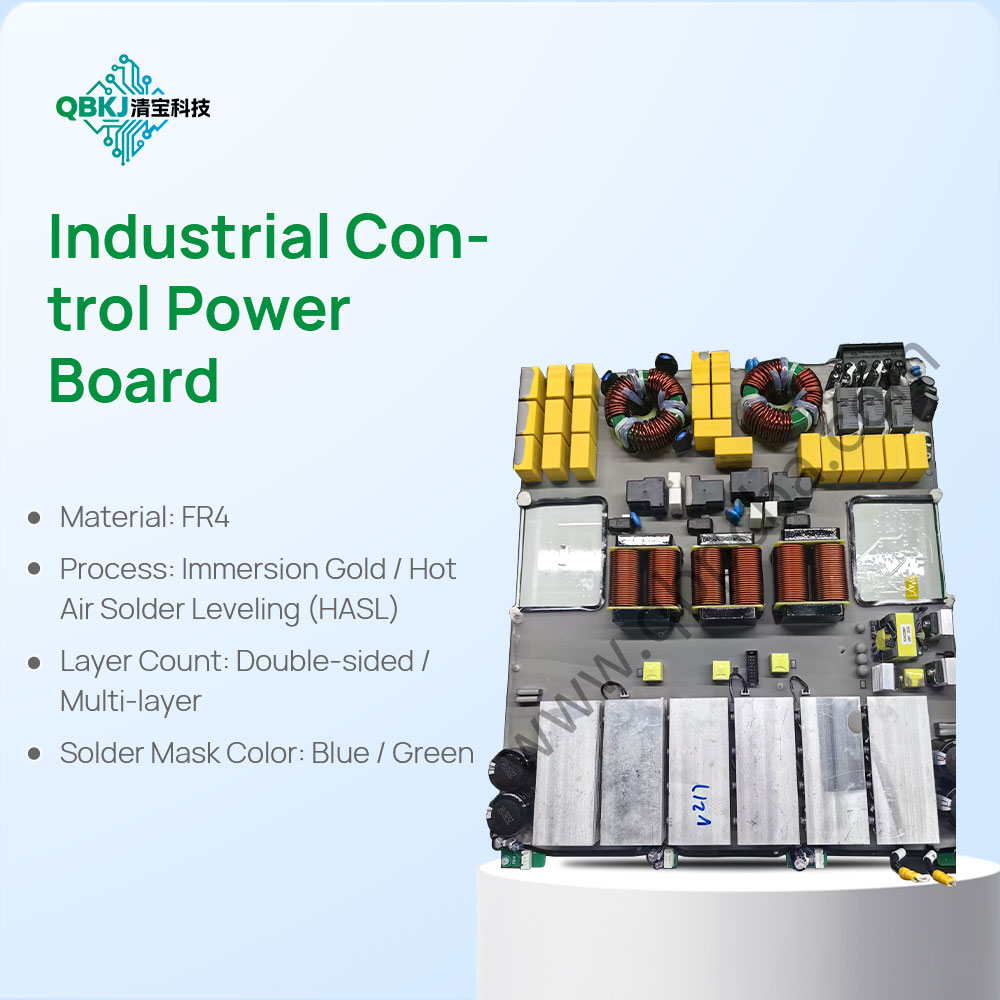
A charger PCB copy power board cloning service specializes in reproducing the circuitry of battery chargers, ACDC adapters, and power supply boards. These boards are found in applications ranging from mobile phone chargers to electric vehicle (EV) charging stations. Cloning a charger board requires expertise in power conversion topologies such as flyback, forward, pushpull, and resonant converters. The service starts by analyzing the original board’s input and output specifications, isolation requirements, and safety features. Engineers then reverse engineer the schematic, identifying the PWM controller, switching transistors, transformers, rectifiers, and feedback network. Because chargers operate at high voltages, creepage and clearance distances must be carefully replicated to meet safety standards such as UL, CE, and CCC.
The copy process involves layerbylayer scanning, component measurement, and PCB layout reconstruction. The transformer is often the most critical component; its turns ratio, core material, and winding arrangement must be duplicated or redesigned to match the original performance. Thermal management is also important, as power losses in switching devices and magnetics can cause overheating. The cloned board may use modern components to improve efficiency, such as synchronous rectifiers or gallium nitride (GaN) transistors, while maintaining pin compatibility. If the original charger uses a proprietary protocol, such as USB Power Delivery (USBPD) or Qualcomm Quick Charge, the service can clone the communication circuitry and, if necessary, develop firmware to emulate the handshake. Testing includes efficiency measurement, ripple and noise analysis, overvoltage and overcurrent protection, and thermal cycling.
A complete charger PCB copy power board cloning service also provides certification support. Clients receive Gerber files, BOM, schematic, and assembly drawings, along with test reports. The cloned board can be produced in small or large quantities, depending on the client’s needs. Because chargers are often safetycritical, the service recommends using highquality components and performing rigorous validation. Customization options include changing the output voltage and current, adding multiport charging, or integrating smart charging algorithms. This service is useful for manufacturers who need a second source, repair shops replacing obsolete boards, and startups developing new charging products based on proven designs. The final cloned board should be reliable, efficient, and fully compliant with relevant safety and electromagnetic compatibility standards.

Email: 15361682656@163.com
Factory: Room 703, Kelunte R&D Building, No. 1 Ganli 5th Road, Jihua Street, Longgang District, Shenzhen City