CN
-
Service Hotline
15766086363


Release Date:Mar 26, 2026
Bluetooth module PCBA custom production is a specialized service that involves the design, manufacturing, and assembly of printed circuit board assemblies (PCBA) for Bluetooth modules, which are essential components for enabling wireless communication between electronic devices. Bluetooth technology has become ubiquitous in modern electronics, used in a wide range of applications including consumer electronics (smartphones, headphones, smartwatches), industrial equipment (sensor networks, industrial control systems), automotive electronics (infotainment systems, hands-free kits), and IoT devices (smart home appliances, environmental sensors). As each application has unique requirements for size, power consumption, communication range, and functionality, custom Bluetooth module PCBA production has become increasingly important, allowing businesses to tailor Bluetooth modules to their specific needs.
The process of Bluetooth module PCBA custom production begins with a detailed requirements analysis, where the production team works closely with the client to understand their specific application needs, technical specifications, and performance expectations. Key requirements typically include Bluetooth version (BLE 5.0, 5.1, 5.2, or classic Bluetooth), communication range (from a few meters to 100 meters or more), power consumption (critical for battery-powered devices), form factor (small size for portable devices), and additional features such as data encryption, low latency, and compatibility with other wireless protocols (Wi-Fi, Zigbee, LoRa). This requirements analysis is critical for ensuring that the custom PCBA meets the client’s needs and performs reliably in the target application.
Once the requirements are defined, the next step is circuit design and PCB layout. The circuit design involves selecting the appropriate Bluetooth chip (such as Nordic nRF52 series, Texas Instruments CC2540 series, or Qualcomm QCC series) based on the application requirements. The Bluetooth chip is the core of the module, responsible for wireless communication, data processing, and power management. The design team also selects other components, including microcontrollers (MCU), memory chips, power management ICs, antennas, and passive components (resistors, capacitors, inductors), to support the Bluetooth chip and enable the required functionality. The PCB layout is designed to minimize signal interference, optimize power consumption, and ensure that the module fits within the required form factor. For small-sized Bluetooth modules (such as those used in wearables), the PCB is often designed as a compact, high-density board with minimal component spacing, requiring precision layout techniques and advanced manufacturing processes.
Component selection is a critical aspect of Bluetooth module PCBA custom production, as the performance and reliability of the module depend heavily on the quality of the components. The production team selects components from reputable suppliers, ensuring that they meet the required specifications for power consumption, temperature range, and reliability. For example, components used in industrial or automotive Bluetooth modules must be able to operate in extreme temperatures (-40°C to 150°C) and withstand vibration and shock, while components used in consumer electronics may prioritize small size and low power consumption. Additionally, the antenna selection is crucial for ensuring good Bluetooth signal strength and communication range—options include PCB antennas (integrated into the PCB), chip antennas (small surface-mount antennas), and external antennas (for longer range applications).
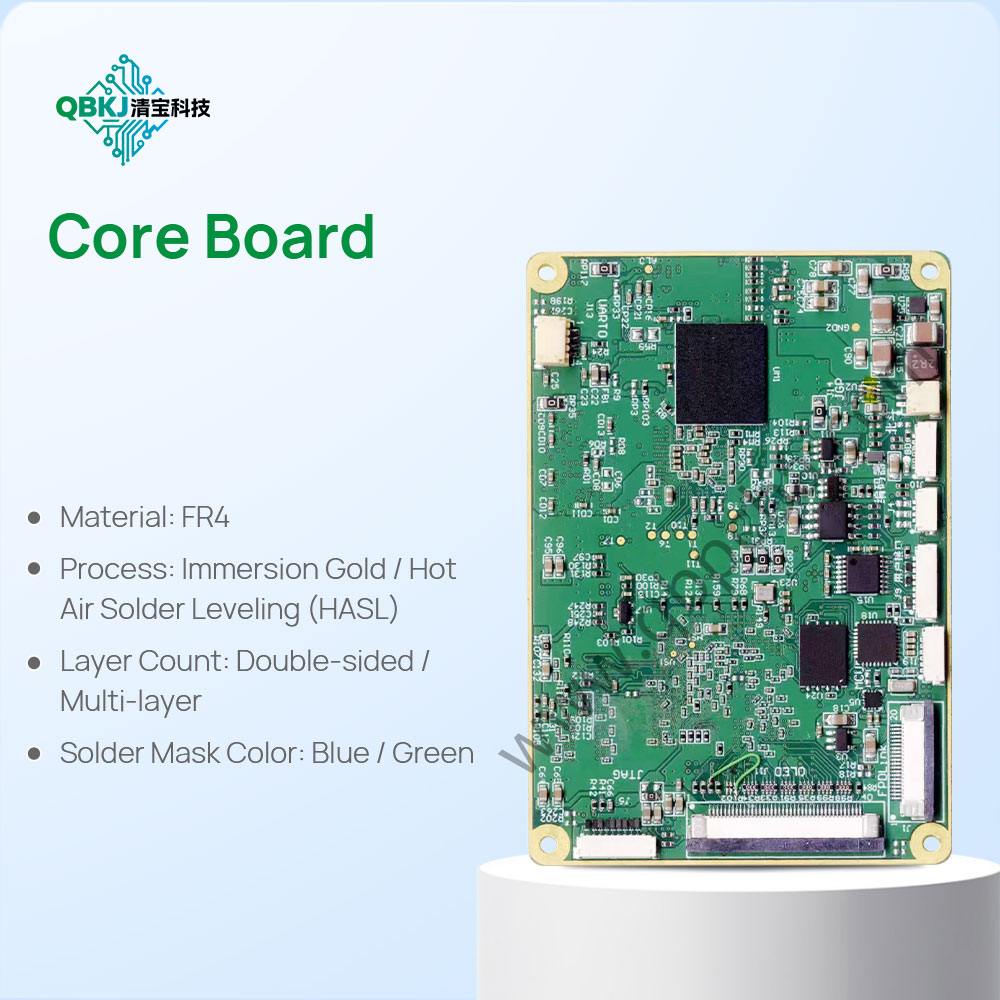
The manufacturing and assembly process of custom Bluetooth module PCBA follows strict quality standards and precision techniques to ensure reliability and performance. The PCB fabrication process uses high-quality substrates (such as FR4 or flexible PCBs for wearable applications) and advanced manufacturing technologies, including laser drilling and LDI (Laser Direct Imaging) for high-density circuits. The SMT (Surface Mount Technology) assembly process involves mounting the components onto the PCB using high-speed placement machines with precision vision systems, ensuring accurate component placement with a tolerance of ±0.05mm. The reflow soldering process is carefully controlled to ensure strong solder joints and prevent damage to sensitive components such as the Bluetooth chip and antenna.
Testing and validation are essential steps in Bluetooth module PCBA custom production to ensure that the module meets the client’s requirements and performs reliably. The testing process includes several stages: electrical testing (to verify the functionality of the circuit and components), Bluetooth performance testing (to measure communication range, data transfer speed, latency, and signal strength), power consumption testing (to ensure that the module meets the power requirements for battery-powered devices), and environmental testing (to verify performance under extreme temperatures, humidity, vibration, and shock). Additionally, the module is tested for compliance with Bluetooth SIG (Special Interest Group) standards, ensuring that it is compatible with other Bluetooth-enabled devices and meets the required wireless communication protocols.
Customization options for Bluetooth module PCBA are extensive, allowing clients to tailor the module to their specific application needs. For example, clients can request custom firmware development to add specific features such as data encryption, device pairing, or integration with other software systems. They can also request custom form factors, including flexible PCBs for wearable devices or compact modules for space-constrained applications. Additionally, the production team can provide value-added services such as pre-programming the Bluetooth chip with the client’s firmware, testing the module with the client’s end device, and providing technical support during the integration process.
Quality control is a top priority in Bluetooth module PCBA custom production, with a full-cycle quality management system implemented from component incoming to final product delivery. All components undergo strict incoming inspections to verify their quality and compliance with specifications, and the manufacturing process is monitored by automated inspection equipment such as AOI (Automatic Optical Inspection) and X-Ray inspection to detect defects. The final modules are subjected to 100% functional testing to ensure that they meet the client’s requirements, and a traceability system is maintained to track each module from production to delivery.
In conclusion, Bluetooth module PCBA custom production is a specialized service that enables businesses to create Bluetooth modules tailored to their specific application needs. By combining detailed requirements analysis, advanced circuit design, high-quality component selection, precision manufacturing, and rigorous testing, manufacturers can deliver reliable, high-performance Bluetooth modules that meet the demands of a wide range of applications. As Bluetooth technology continues to evolve with new versions and features, custom PCBA production will remain a critical enabler of innovation in wireless communication.

Email: 15361682656@163.com
Factory: Room 703, Kelunte R&D Building, No. 1 Ganli 5th Road, Jihua Street, Longgang District, Shenzhen City