CN
-
Service Hotline
15766086363


Release Date:Jan 20, 2026
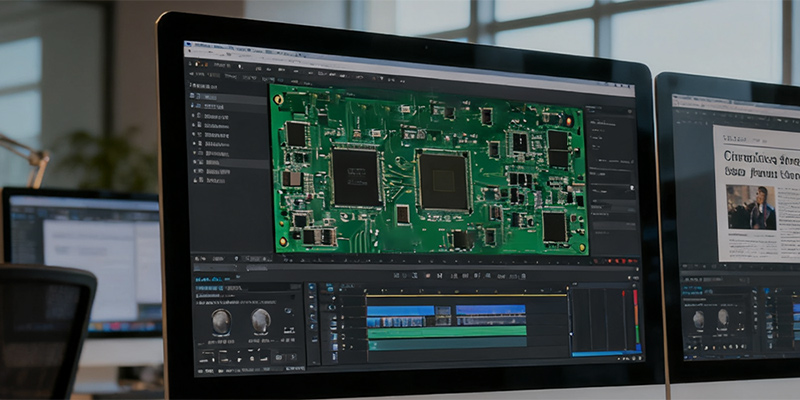
PCB reverse engineering is the technical process of dissecting a physical printed circuit board (PCB) to extract its design details—including trace routing, component footprints, via locations, and layer structures—with the goal of recreating its digital schematic and layout files. Unlike cloning, which focuses on replicating the final product, reverse engineering prioritizes understanding the PCB’s design logic, making it a foundation for cloning, modification, or reengineering.
The process begins with physical analysis: technicians use high-resolution digital microscopes to capture top and bottom layer details, and X-ray machines or layer-peeling techniques (for multi-layer PCBs) to map internal trace connections—critical for boards with 4+ layers where internal paths are invisible. Next, component footprints are documented: each pad’s size, shape, and spacing are measured to create a library of footprints compatible with PCB design software (e.g., Altium Designer, KiCad).
Trace routing is then mapped: using continuity testers or specialized reverse-engineering tools (e.g., ScanCAD), engineers trace each electrical path from component pad to via, recording net names and connections to build a schematic. For high-speed PCBs (e.g., those in IoT devices), impedance measurements may be taken to replicate signal integrity characteristics. Once the schematic is complete, a digital layout file is created, mirroring the original PCB’s dimensions, trace widths, and solder mask boundaries.
Validation is key: the reconstructed layout is overlaid with images of the original PCB to check alignment, and a prototype PCB is fabricated to test electrical functionality. PCB reverse engineering is valuable for legacy equipment maintenance (replicating obsolete PCBs), design optimization (identifying inefficiencies in the original layout), and educational purposes (studying circuit design best practices). It requires precision and technical expertise to ensure the extracted design accurately reflects the original PCB’s electrical and physical properties.

Email: 1330695973@qq.com
Factory: Room 703, Kelunte R&D Building, No. 1 Ganli 5th Road, Jihua Street, Longgang District, Shenzhen City