CN
-
Service Hotline
15766086363


Release Date:Jan 13, 2026
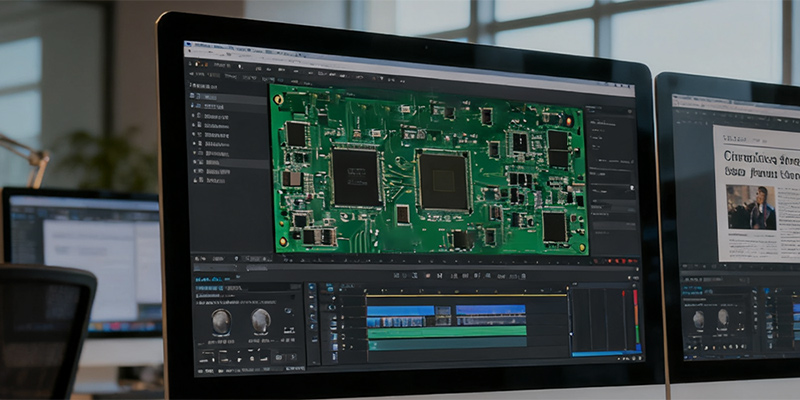
A PCBA clone expert is a professional with specialized knowledge and skills to oversee, execute, and troubleshoot all stages of Printed Circuit Board Assembly cloning—from analysis to fabrication. Their core expertise starts with reverse-engineering proficiency: they can dissect original PCBs using advanced tools (X-ray machines, digital microscopes) to extract layout details, identify obsolete or unmarked components (via circuit tracing or datasheet cross-referencing), and reconstruct accurate schematics using CAD software (Altium, KiCad). They understand electrical engineering fundamentals, enabling them to verify signal paths, component compatibility, and thermal performance—critical for avoiding cloning errors.
Technical versatility is key: PCBA clone experts are adept with cloning technologies, including automated test equipment (ATE) for validating cloned PCBs, firmware extraction tools for programmable components (microcontrollers, FPGAs), and layer-peeling techniques for multi-layer PCBs. They also possess deep knowledge of manufacturing processes—solder paste application, reflow soldering, PCB etching—to ensure cloned PCBs match the original’s fabrication standards.
Problem-solving is another core skill: when cloned PCBs fail functional tests (e.g., no communication, power issues), experts can systematically debug—using oscilloscopes to analyze signal integrity, multimeters to test component values, or in-circuit debuggers to fix firmware mismatches. They can source hard-to-find components, evaluating equivalents for compatibility (e.g., replacing a discontinued resistor with a modern alternative of the same tolerance and power rating).
Additionally, PCBA clone experts understand industry regulations: they ensure cloned PCBs comply with standards like RoHS (environmental) or IPC-A-610 (assembly quality), avoiding legal or safety risks. They collaborate with teams (engineers, manufacturers, testers) to streamline cloning workflows, document processes for repeatability, and provide guidance on scaling from prototypes to mass production. Ultimately, their role is to guarantee cloning accuracy, efficiency, and reliability—turning original PCBs into functional, high-quality clones that meet client needs (e.g., legacy equipment replacement, cost optimization).

Email: 1330695973@qq.com
Factory: Room 703, Kelunte R&D Building, No. 1 Ganli 5th Road, Jihua Street, Longgang District, Shenzhen City