CN
-
Service Hotline
15766086363


Release Date:Dec 19, 2025
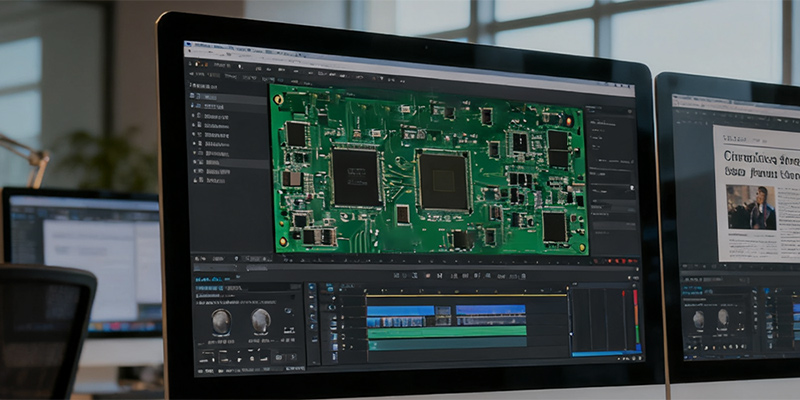
PCBA Copy Quality Inspection is a rigorous process that verifies the quality, accuracy, and reliability of cloned PCBs—ensuring they meet industry standards, client specifications, and the original PCBA’s performance benchmarks. This inspection is critical for preventing defective units from reaching production or end-users, reducing warranty claims and reputational risk.
Key inspection steps include:
Visual Inspection: Using automated optical inspection (AOI) tools and manual checks (for complex areas) to verify physical attributes: component placement (no misalignment/missing parts), solder joint quality (no cold joints, bridging, or tombstoning), and PCB condition (no scratches, trace damage, or contamination). AOI systems can detect defects as small as 0.1mm, ensuring high precision.
Electrical Inspection: Conducting continuity tests (to check for open/short circuits), impedance tests (for high-speed traces), and insulation resistance tests (to prevent electrical leakage). For power PCBs, voltage/current tests confirm output stability under load—e.g., a cloned LED driver PCB is tested to ensure it delivers consistent current (±5%) across operating voltages.
Functional Inspection: Testing the cloned PCB’s performance under real-world conditions: simulating input signals (e.g., sensor data, user commands) and verifying outputs (e.g., motor control, data transmission) match the original. For firmware-dependent PCBs, functional tests confirm software runs correctly (e.g., no crashes, accurate data processing).
Compliance Inspection: Verifying adherence to industry standards: EMC testing (per CISPR/FCC) to ensure no excessive radiation, RoHS testing (for lead-free compliance), and industry-specific standards (e.g., IPC-A-610 for assembly quality, ISO 13485 for medical PCBs). Inspection reports include test results and compliance certificates for audit purposes.
Inspection is performed at multiple stages: post-prototype fabrication, post-production (sample checks), and pre-delivery (100% inspection for critical applications like medical devices). Providers use calibrated equipment and trained inspectors to ensure consistency. This service gives clients confidence in the cloned PCBs’ quality and reduces the risk of field failures.

Email: 1330695973@qq.com
Factory: Room 703, Kelunte R&D Building, No. 1 Ganli 5th Road, Jihua Street, Longgang District, Shenzhen City