CN
-
Service Hotline
15766086363


Release Date:Dec 08, 2025
PCBA (Printed Circuit Board Assembly) copy service, also known as PCB cloning or reverse engineering for PCBAs, is a specialized technical service that replicates the design, components, and functionality of an existing PCBA. This service caters to businesses across industries—electronics manufacturing, automotive, medical devices, and consumer tech—seeking to reproduce proven PCBAs for production scaling, obsolete part replacement, or design optimization. Unlike simple PCB design, PCBA copy involves reverse-engineering both the bare PCB (layout, traces, vias) and the assembled components (solder joints, component values, placement), ensuring the cloned PCBA matches the original’s form, fit, and function.
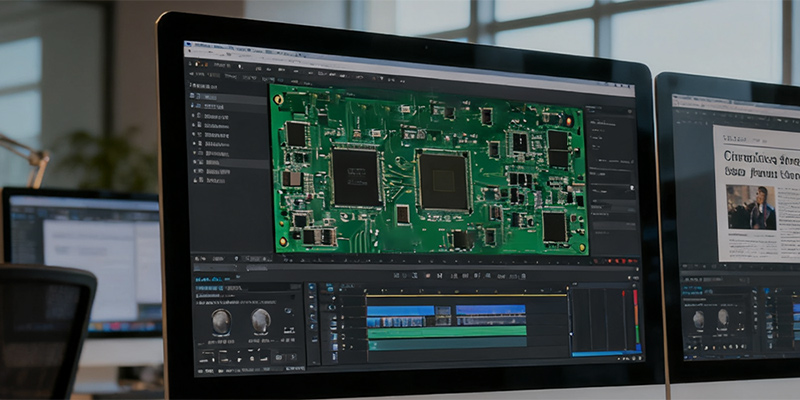
The core process of PCBA copy service follows a structured, precision-driven workflow. First, data collection involves thoroughly documenting the original PCBA: high-resolution imaging (using optical scanners or microscopes) to capture the PCB’s physical layout, component placement, and solder joint details; component identification (recording part numbers, values, and manufacturers via visual inspection or specialized software); and functional testing (powering the original PCBA to verify electrical performance, signal paths, and output—critical for validating the clone later). Next, reverse engineering translates physical data into digital formats: PCB layout software (e.g., Altium Designer, KiCad) is used to recreate the PCB’s gerber files (the standard format for PCB manufacturing) by tracing each conductive path, placing vias, and matching the original’s layer stack-up (single, double, or multi-layer). Component footprints are precisely replicated to ensure compatibility with the original parts or suitable alternatives (if parts are obsolete).
The third phase, prototype fabrication and testing, is pivotal for quality assurance: a small batch of cloned PCBs is manufactured, populated with identical or equivalent components, and assembled using the same soldering processes (SMT—Surface Mount Technology, or THT—Through-Hole Technology) as the original. Rigorous testing follows, including electrical continuity checks (to confirm no open/short circuits), functional testing (comparing the clone’s performance to the original under identical conditions—e.g., voltage, current, signal frequency), and environmental testing (temperature, humidity, vibration) if the PCBA is for harsh environments (e.g., automotive or industrial use). Any discrepancies (e.g., signal delays, component mismatches) are addressed by revising the digital design and re-testing until the clone meets the original’s specifications.
Key benefits of PCBA copy service include time and cost savings: cloning a proven PCBA eliminates the need for (from-scratch) design and extensive validation, cutting development time by 50–70% compared to new PCBA design. It also solves obsolescence issues—if an original PCBA’s components are no longer available, copy services can source compatible alternatives and adjust the design slightly to maintain functionality. For businesses scaling production, PCBA copy ensures consistency with existing products, avoiding compatibility issues between new and legacy systems. Additionally, the service supports design optimization: while cloning, engineers can identify and address flaws in the original PCBA (e.g., inefficient trace routing, overheating components) without compromising core functionality, enhancing the clone’s reliability or performance.
When selecting a PCBA copy service provider, businesses prioritize technical expertise (experience with multi-layer PCBs, high-density components like BGAs—Ball Grid Arrays, and specialized industries like medical devices, which require compliance with strict standards) and quality control (ISO certifications, in-house testing labs, and a track record of matching original PCBA performance). Ethical and legal compliance is also critical—reputable providers require clients to prove ownership of the original PCBA’s intellectual property (IP) or obtain proper licensing, avoiding copyright infringement risks. Overall, PCBA copy service is a strategic solution for businesses seeking to leverage existing PCB designs efficiently, reduce development risks, and maintain continuity in production.

Email: 1330695973@qq.com
Factory: Room 703, Kelunte R&D Building, No. 1 Ganli 5th Road, Jihua Street, Longgang District, Shenzhen City