CN
-
Service Hotline
15766086363


Release Date:Dec 05, 2025
PCBA Copy and Layout is an integrated service that combines reverse engineering of an original PCBA with the precise recreation of its PCB layout—ensuring the cloned PCB’s physical design (trace routing, component placement, layer stack-up) matches the original’s form, fit, and function. Unlike basic PCBA copy (which may prioritize functionality over layout precision) or standalone PCB layout (which uses original design files), this service focuses on replicating the original’s layout details to maintain compatibility with enclosures, connectors, and adjacent components, while also optimizing for manufacturing feasibility. It is critical for businesses that need cloned PCBAs to integrate seamlessly into existing product assemblies, such as legacy equipment replacement or production scaling for mature products.
The service workflow begins with layout data capture from the original PCBA. Engineers use high-precision tools to document every aspect of the original layout: high-resolution optical scanners (with 1–5 micron resolution) capture top and bottom layer traces, component footprints, and silkscreen markings; X-ray machines map internal layers for multi-layer PCBs (up to 32 layers) and hidden connections (e.g., BGA solder balls); and coordinate measuring machines (CMMs) record component positions and PCB dimensions to ensure alignment with mechanical enclosures. This data is compiled into a digital layout library, including trace widths, spacing, via sizes, and layer stack-up parameters (core thickness, prepreg material).
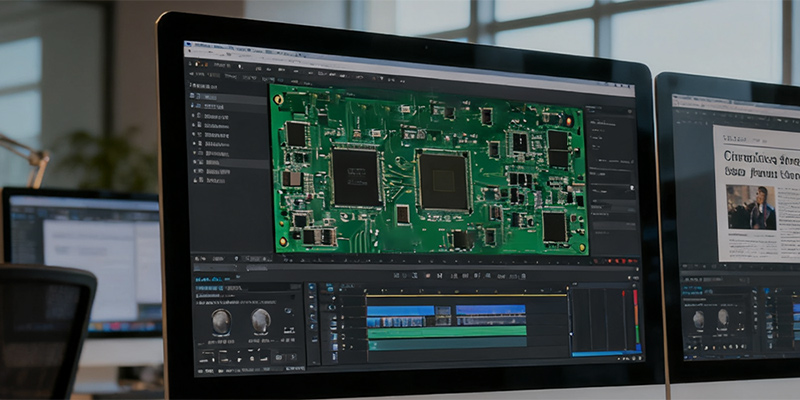
Next, layout recreation in PCB design software takes place. Using industry-standard tools (e.g., Altium Designer, KiCad, Mentor Graphics), engineers digitally reconstruct the PCB layout, adhering to the captured data with strict precision. Key steps include: placing component footprints exactly as per the original (matching X/Y coordinates and rotation angles); routing traces to replicate the original’s path—including bends, jogs, and differential pair spacing (critical for high-speed signals); adding vias (through-hole, blind, or buried) in identical positions and sizes; and including silkscreen markings (part numbers, logos) and solder mask openings to match the original’s cosmetic and functional layout. For multi-layer PCBs, layer alignment is ensured using the original’s registration marks, preventing trace misalignment between layers.
Layout optimization for manufacturing is a key intermediate step. While replicating the original layout, engineers also adjust minor details to improve manufacturing feasibility—without altering form or function. For example, they may widen narrow traces (from 0.1mm to 0.15mm) to meet standard SMT assembly tolerances, adjust via sizes to match common drill bits, or add test points to facilitate automated testing—all while ensuring the modified layout still fits the original enclosure and connects to adjacent components. This optimization reduces manufacturing defects and lowers production costs, while maintaining compatibility with the original product.
Layout validation and prototype testing confirm accuracy. The digital layout is exported as gerber files and used to fabricate a prototype PCB. Engineers then compare the prototype’s layout to the original PCBA using side-by-side visual inspection and dimensional checks (via CMMs). They also conduct electrical tests—continuity checks to verify trace connectivity, impedance testing to ensure signal integrity (critical for high-frequency PCBs), and thermal analysis to confirm the layout does not cause overheating (matching the original’s heat distribution). Any layout discrepancies (e.g., a misaligned component footprint) are corrected in the digital design, and the prototype is re-fabricated until alignment is achieved.
Key benefits of PCBA Copy and Layout include mechanical compatibility: the cloned PCB fits perfectly into existing enclosures and connects to adjacent components, eliminating the need for redesigning product housing. It also ensures signal integrity: replicating trace routing and spacing maintains the original’s electrical performance, especially for high-speed or high-frequency PCBs (e.g., communication modules). Additionally, it supports manufacturing efficiency: optimized layouts reduce assembly errors and streamline testing, lowering production costs.
When selecting a PCBA Copy and Layout provider, businesses prioritize layout precision capabilities (experience with multi-layer PCBs and high-density layouts), software expertise (proficiency in industry-standard PCB design tools), mechanical compatibility testing (ability to verify fit with enclosures), and signal integrity expertise (for high-speed PCBs). Certifications like IPC-2221 (PCB design standards) and IPC-A-600 (PCB acceptability) are also essential. Overall, PCBA Copy and Layout delivers a cloned PCB that is not just functionally equivalent, but physically identical to the original—ensuring seamless integration into existing products.

Email: 1330695973@qq.com
Factory: Room 703, Kelunte R&D Building, No. 1 Ganli 5th Road, Jihua Street, Longgang District, Shenzhen City